Gallery contains 15 images
×
Photo 1 of 15
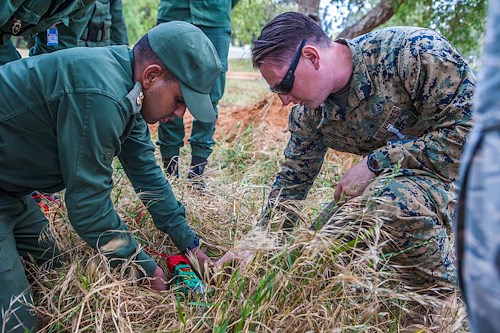
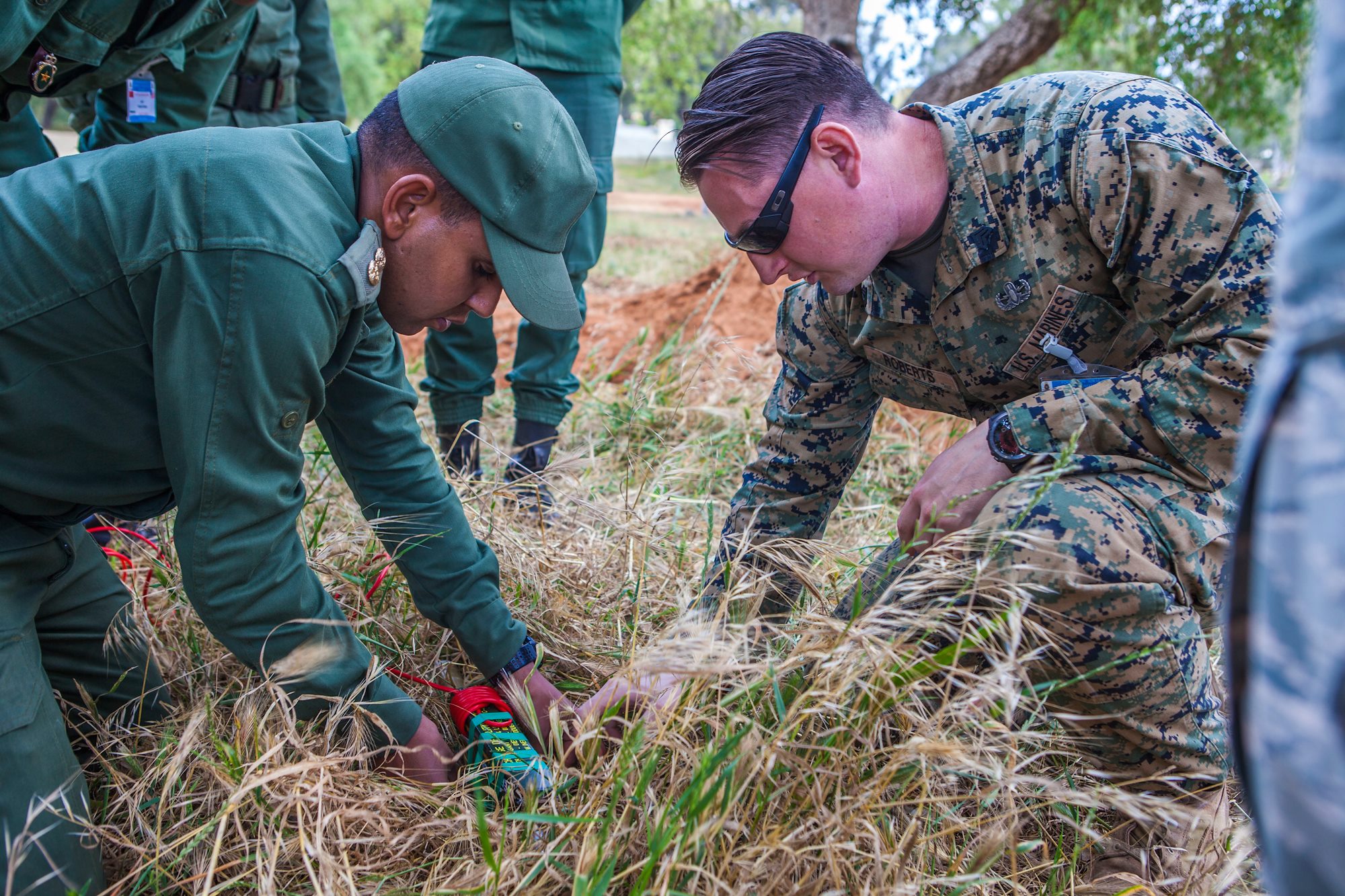
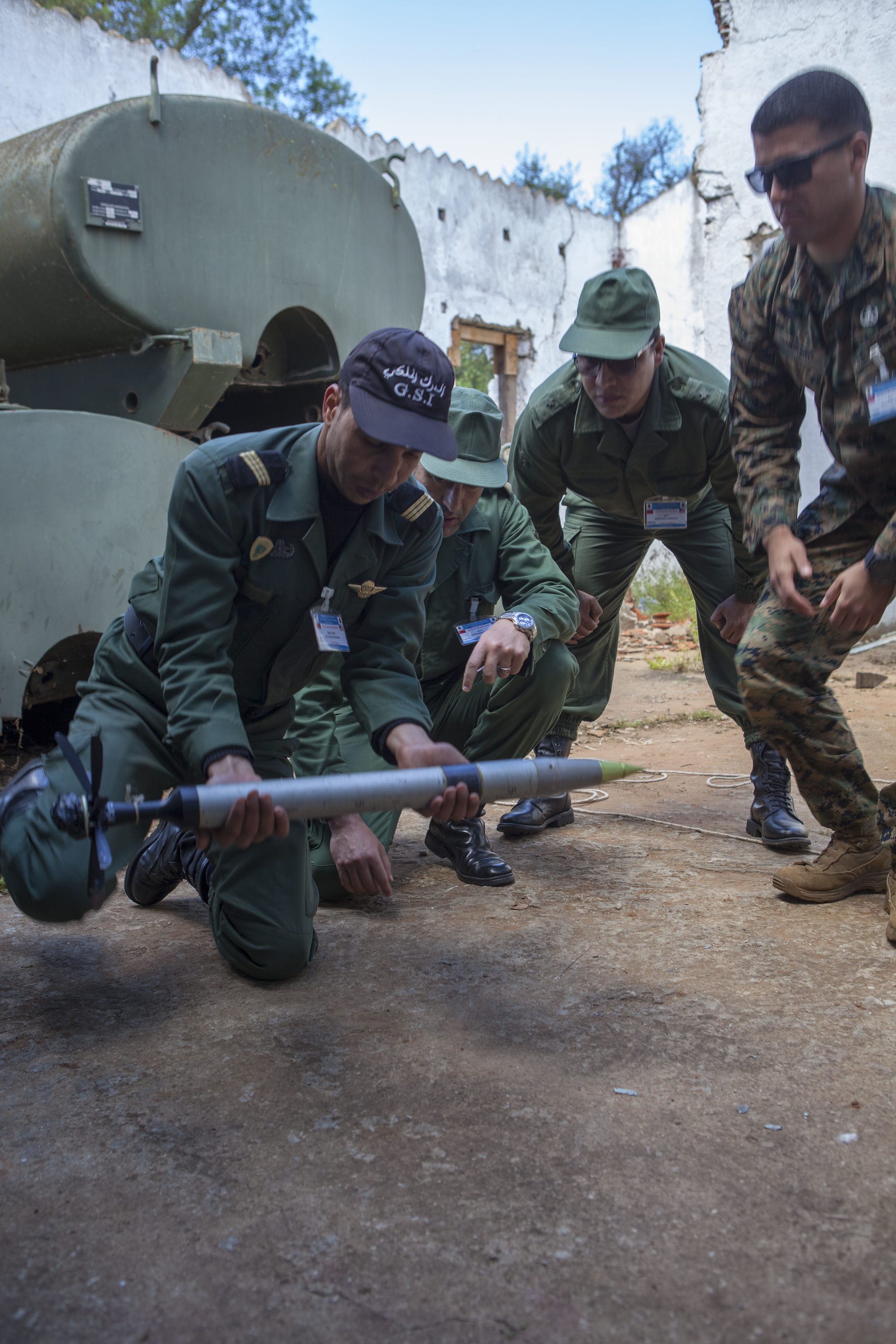
Humanitarian Mine Action builds demining capacity in Morocco
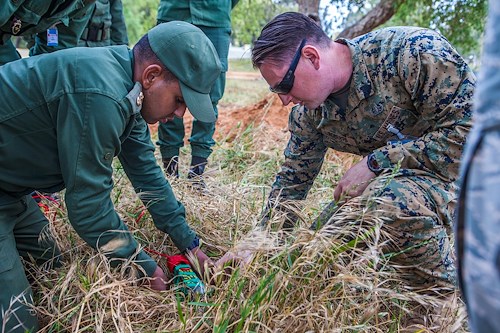
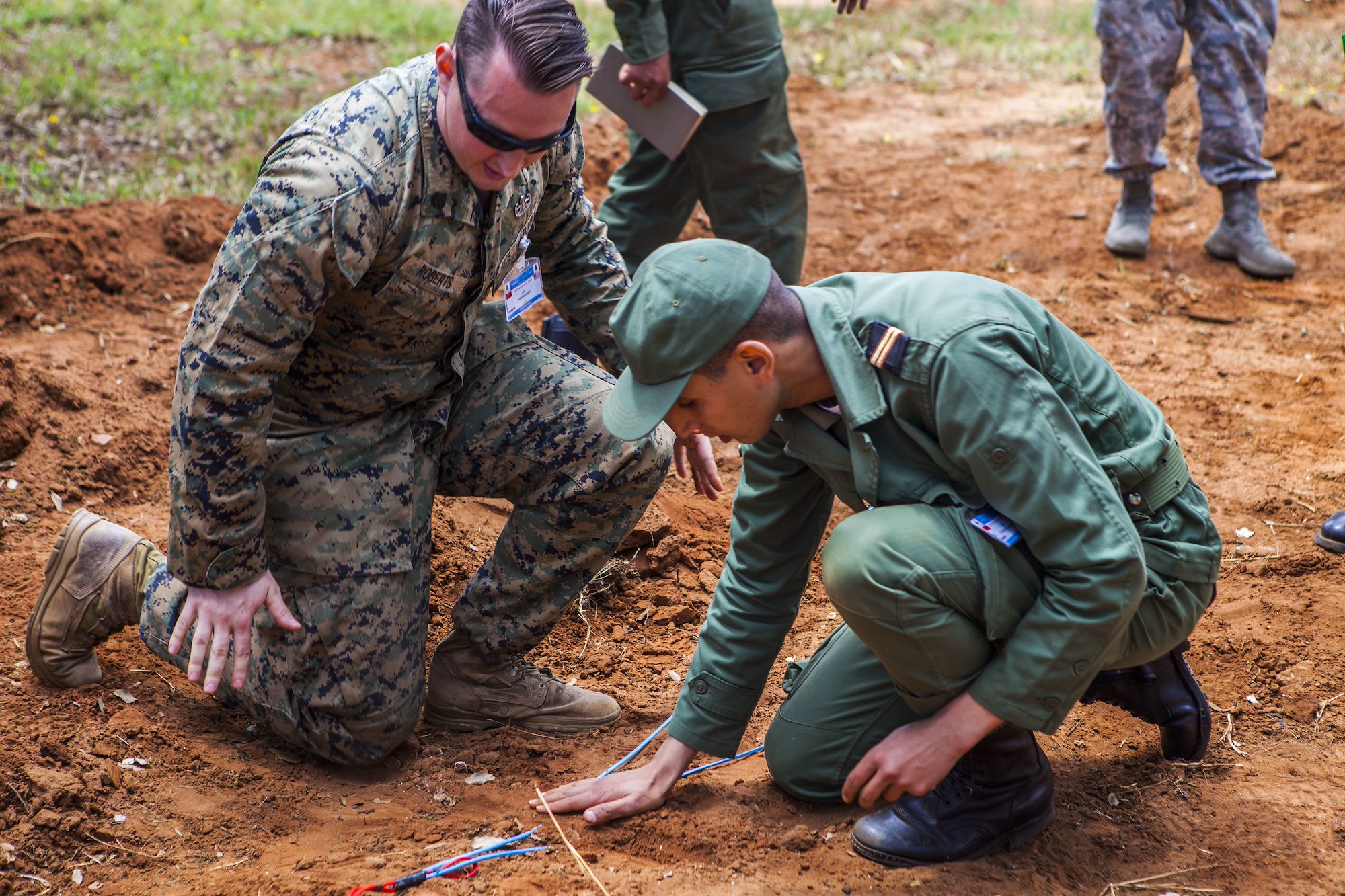
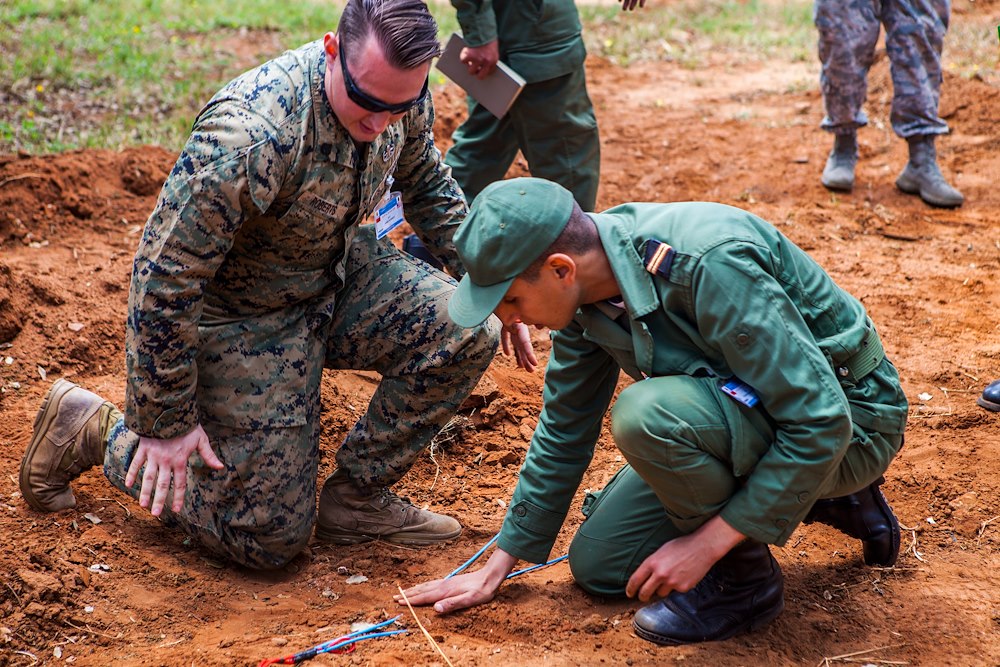
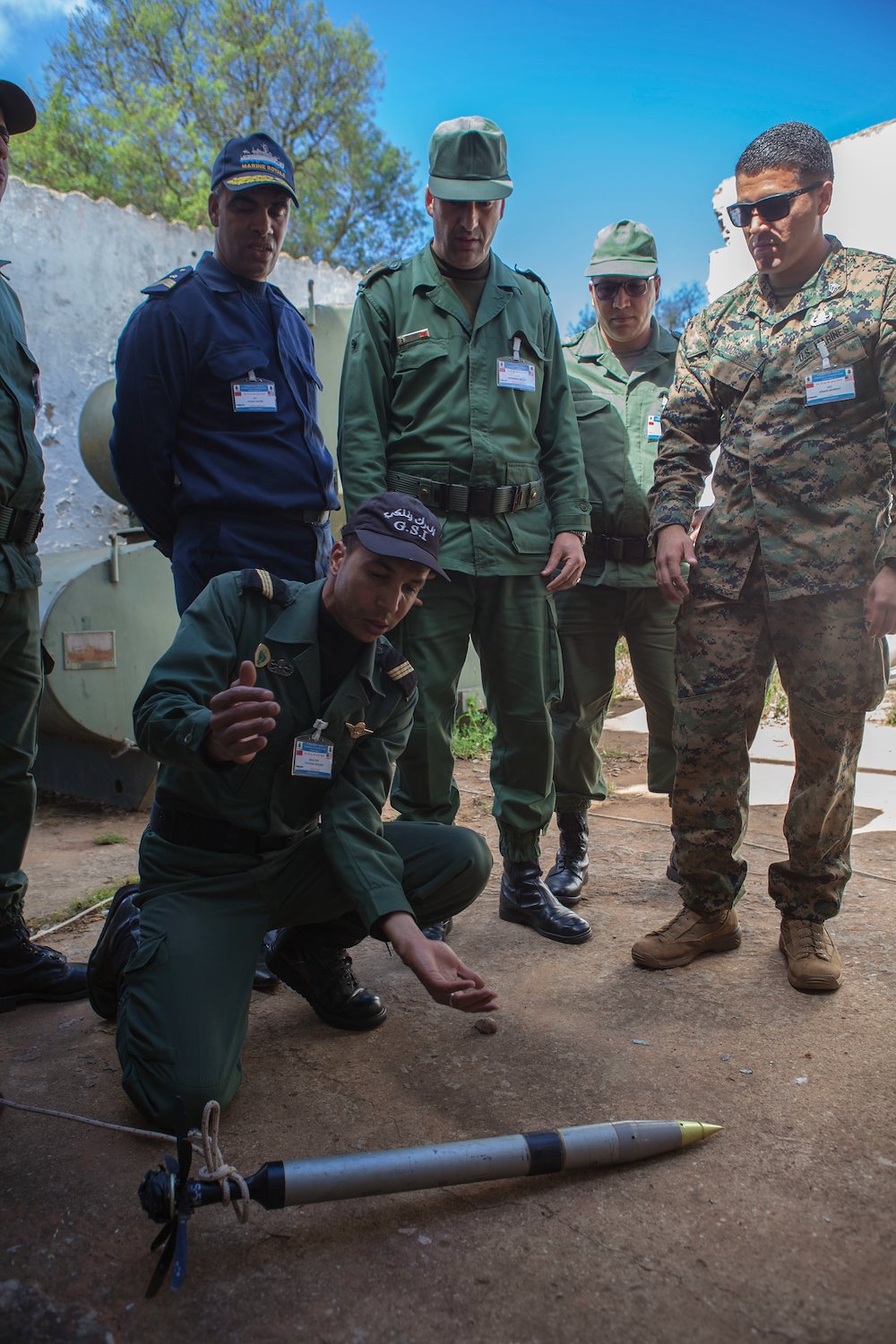
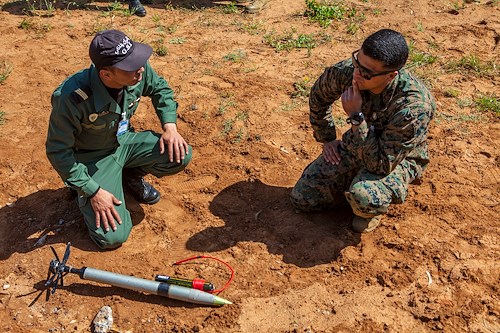
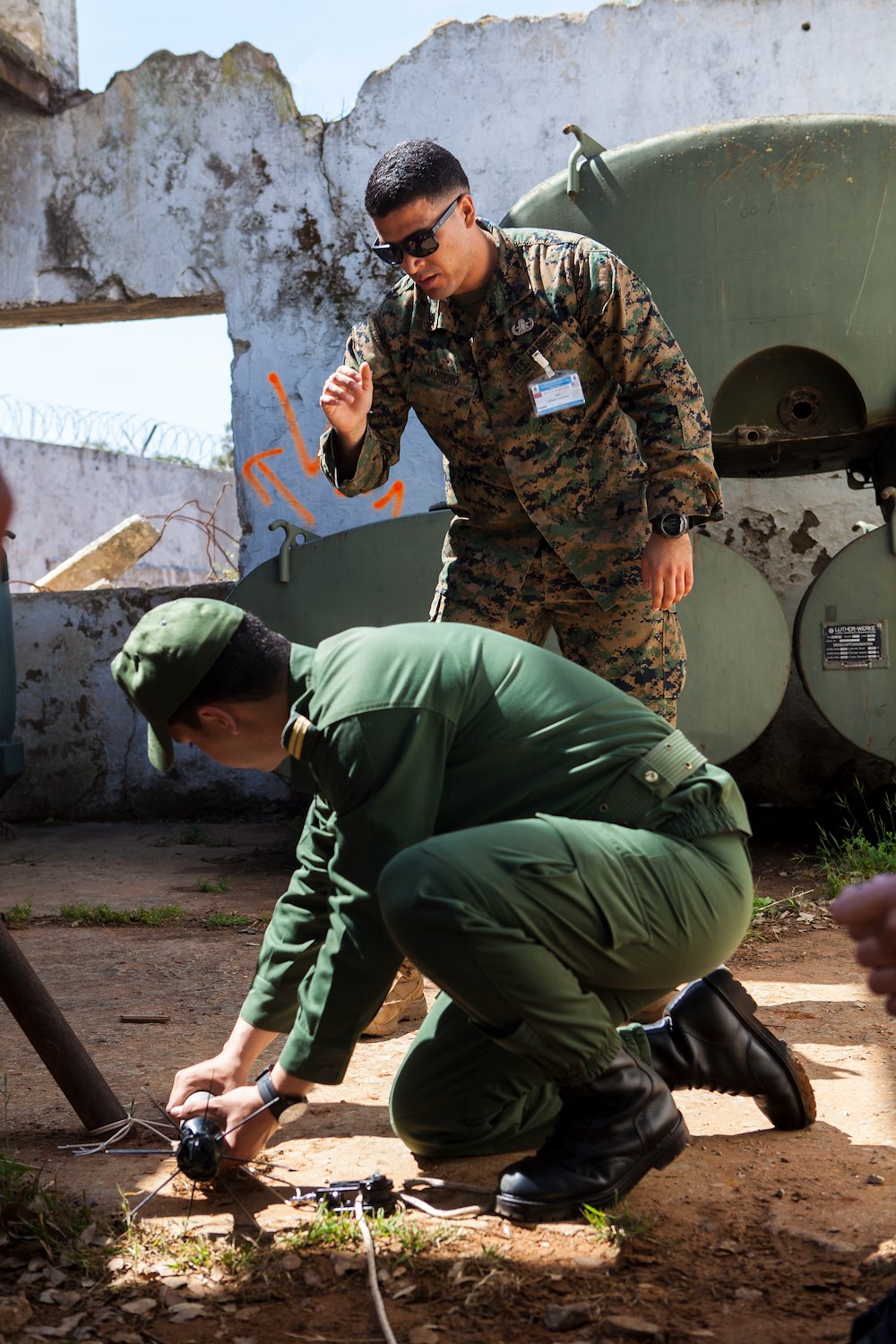
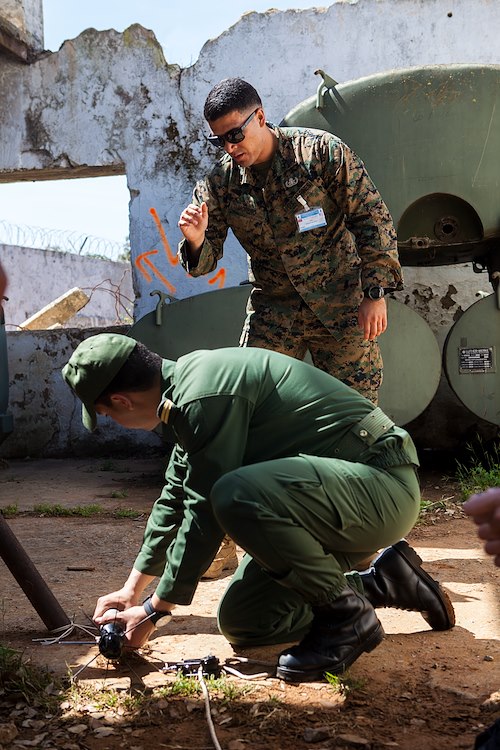
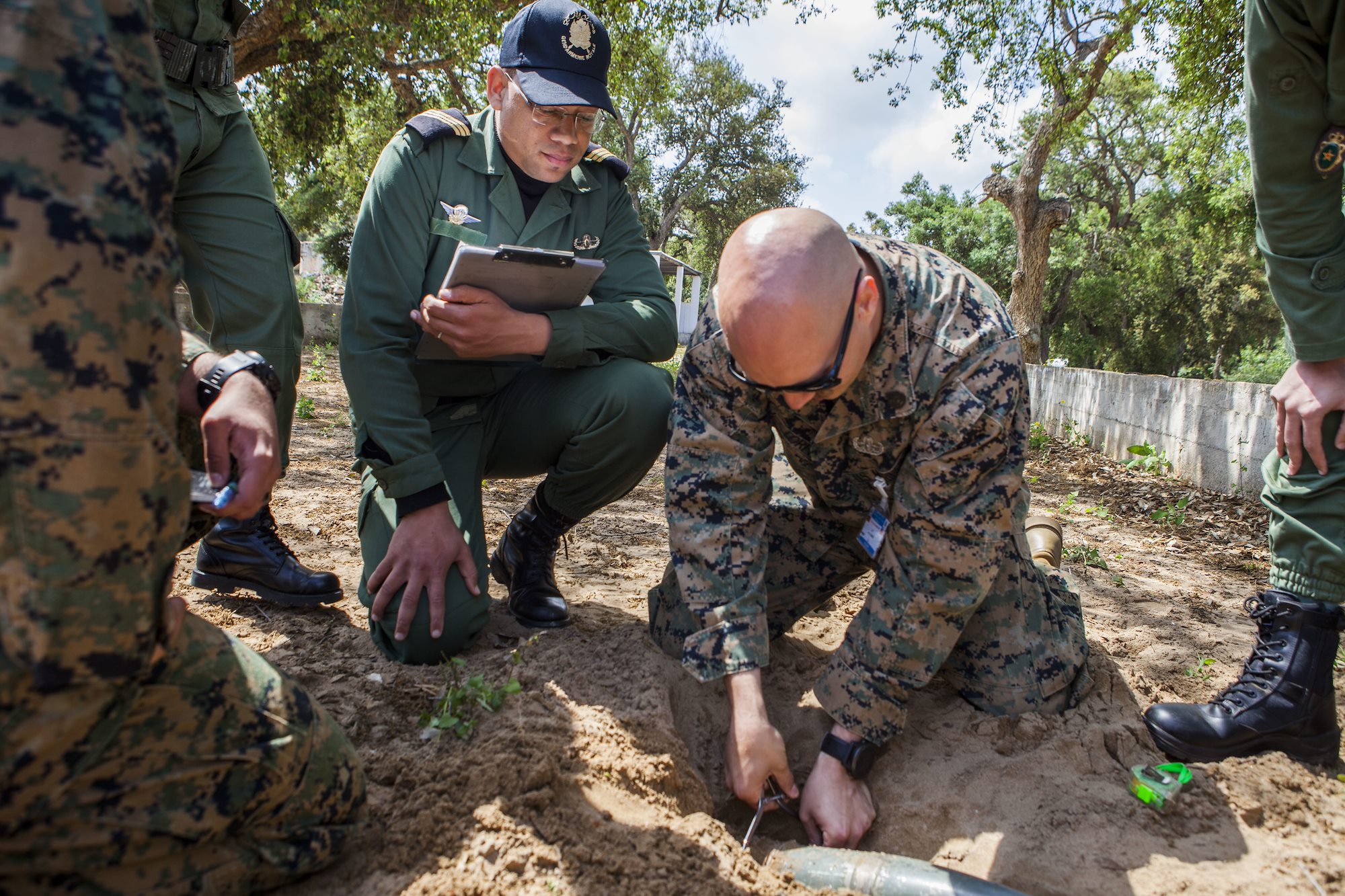
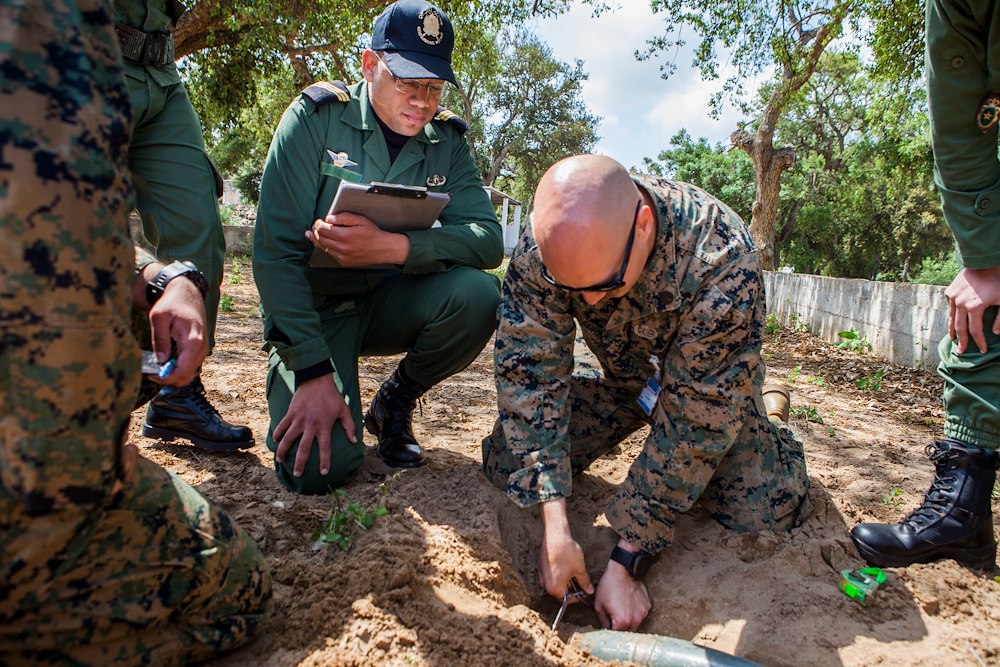
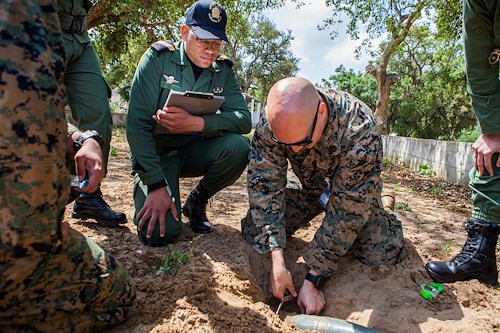
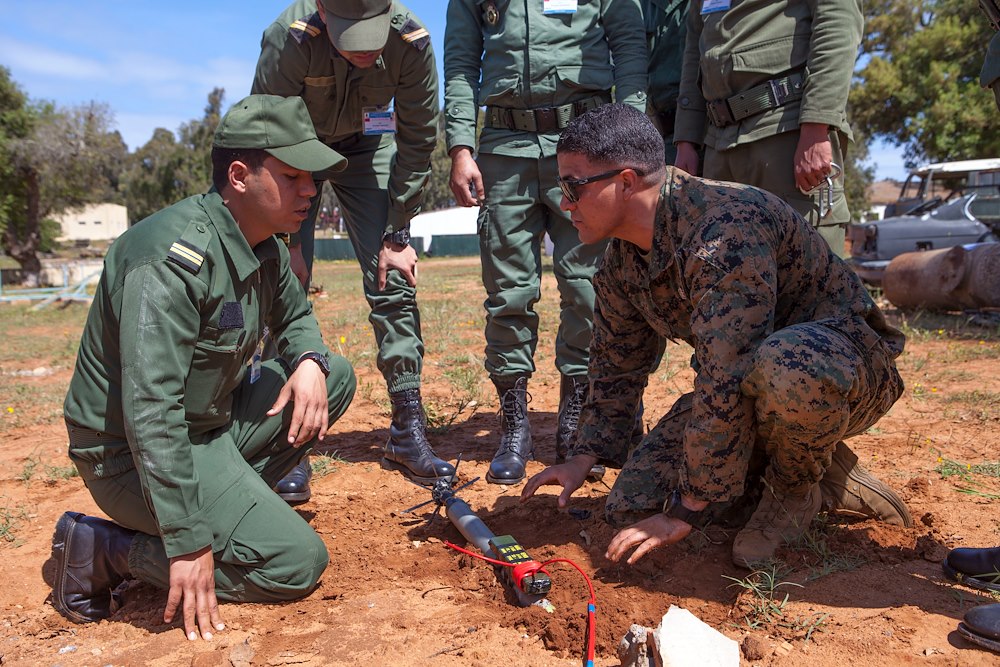
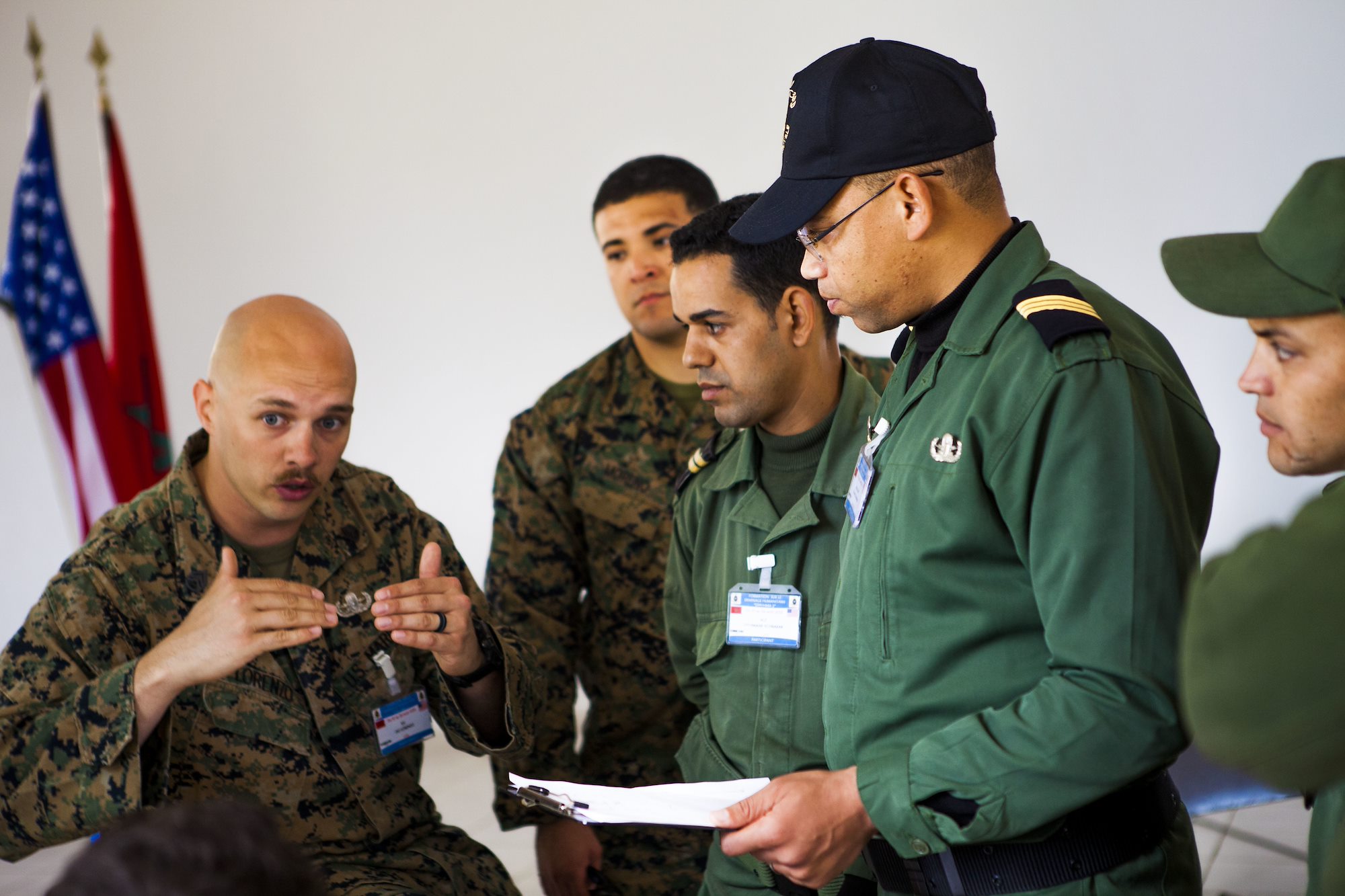
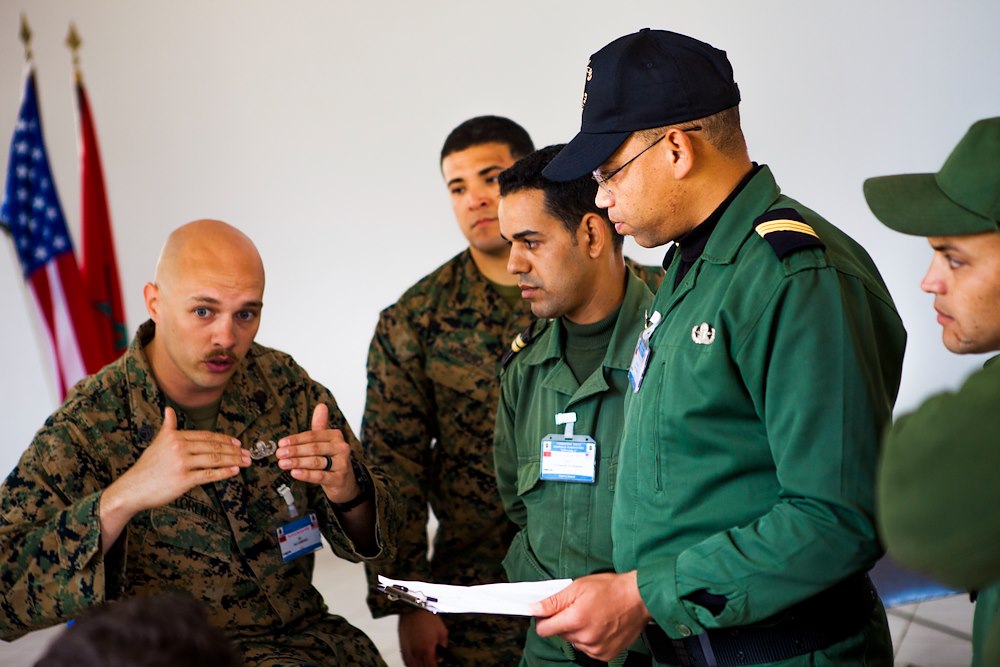
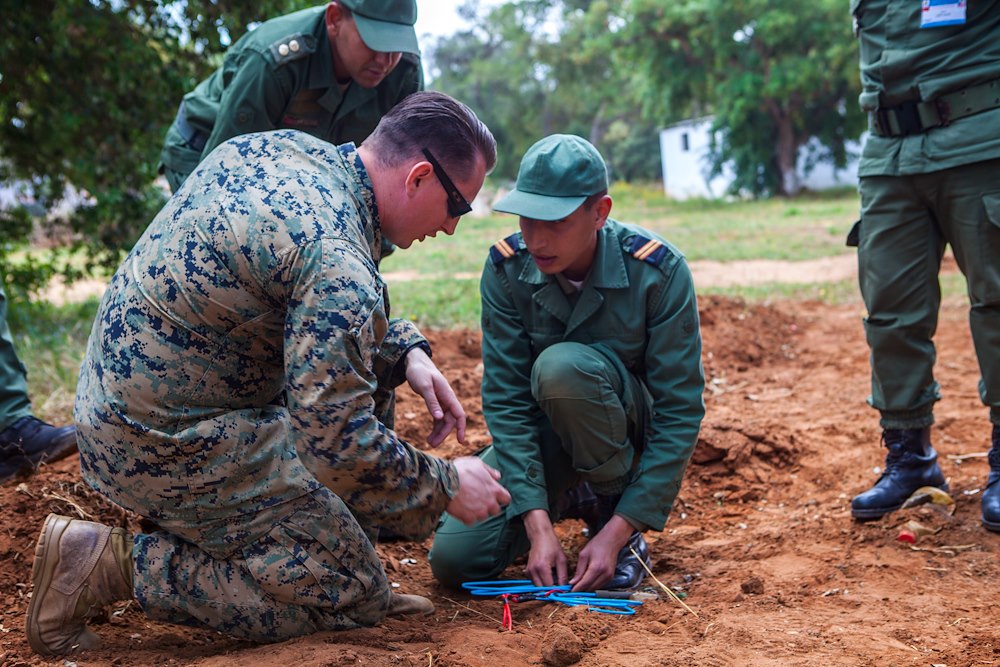
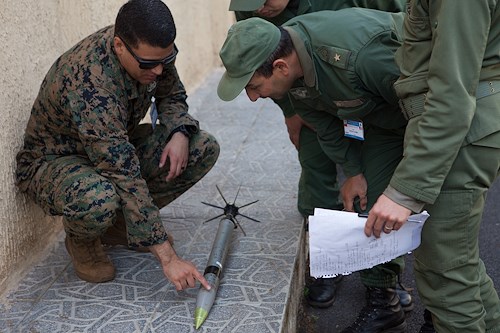
A U.S. Marine with Special Purpose Marine Air-Ground Task Force-Crisis Response-Africa 19.2, Marine Forces Europe and Africa, discusses detonating cord emplacement procedures with a member of the Moroccan Royal Armed Forces during Humanitarian Mine Action training at Unite de Secours et Sauvetage’s Base, Kenitra, Morocco, April 22, 2019. The Moroccan soldiers trained alongside the U.S. Marines in order to identify and properly dispose of explosive ordnance. SPMAGTF-CR-AF is deployed to conduct crisis-response and theater-security operations in Africa and promote regional stability by conducting military-military training exercises throughout Europe and Africa. (U.S. Marine Corps photo by Capt. Clay Groover)
Photo by: Capt. Clayton Groover
Photo 2 of 15
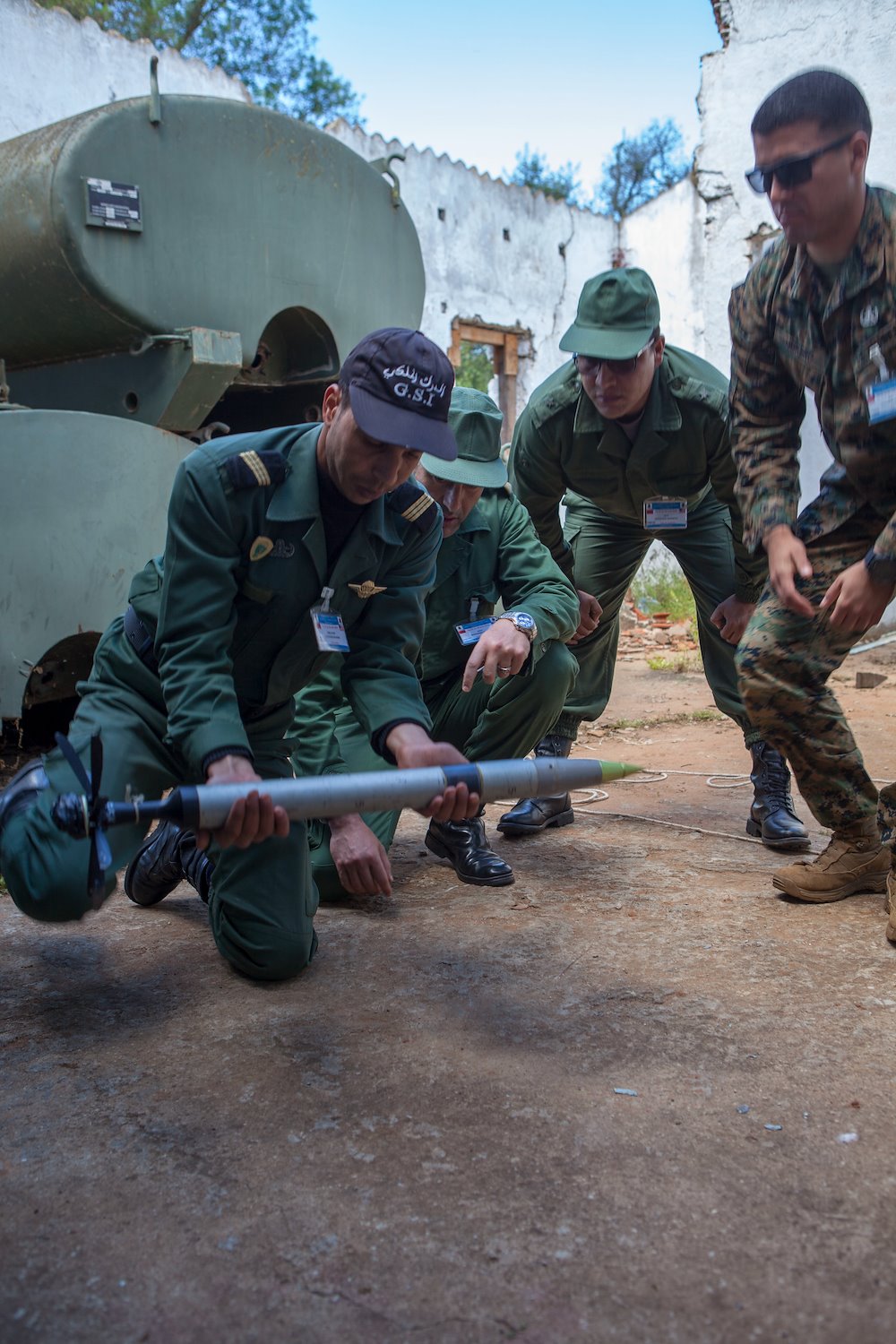
Humanitarian Mine Action builds demining capacity in Morocco
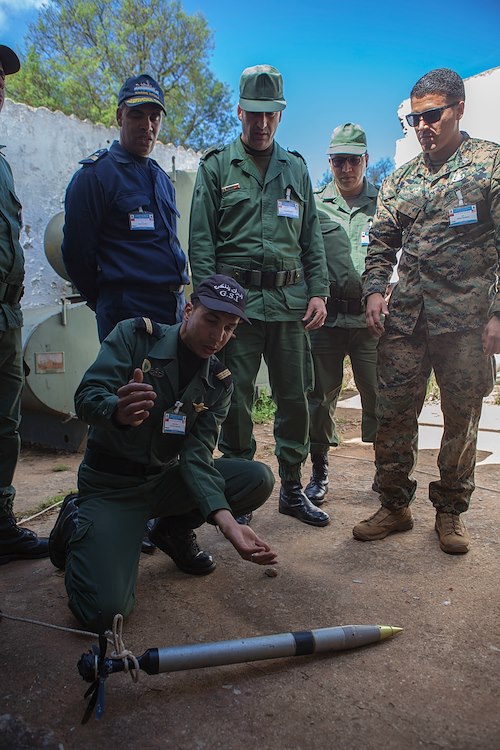
A U.S. Marine with Special Purpose Marine Air-Ground Task Force-Crisis Response-Africa 19.2, Marine Forces Europe and Africa, discusses detonating cord emplacement procedures with a member of the Moroccan Royal Armed Forces during Humanitarian Mine Action training at Unite de Secours et Sauvetage’s Base, Kenitra, Morocco, April 22, 2019. The Moroccan soldiers trained alongside the U.S. Marines in order to identify and properly dispose of explosive ordnance. SPMAGTF-CR-AF is deployed to conduct crisis-response and theater-security operations in Africa and promote regional stability by conducting military-military training exercises throughout Europe and Africa. (U.S. Marine Corps photo by Capt. Clay Groover)
Photo by: Capt. Clayton Groover
Photo 3 of 15
Humanitarian Mine Action builds demining capacity in Morocco
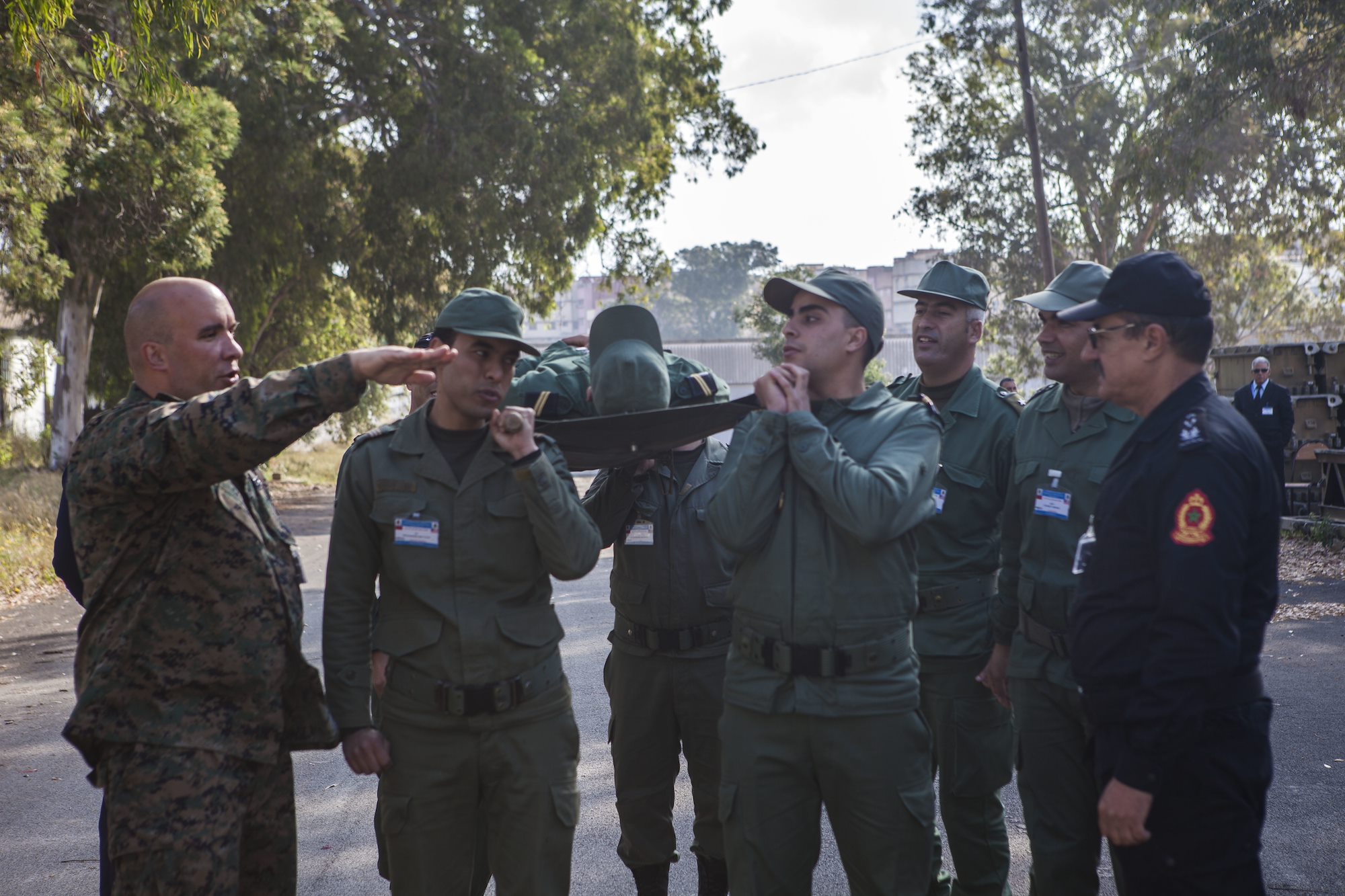
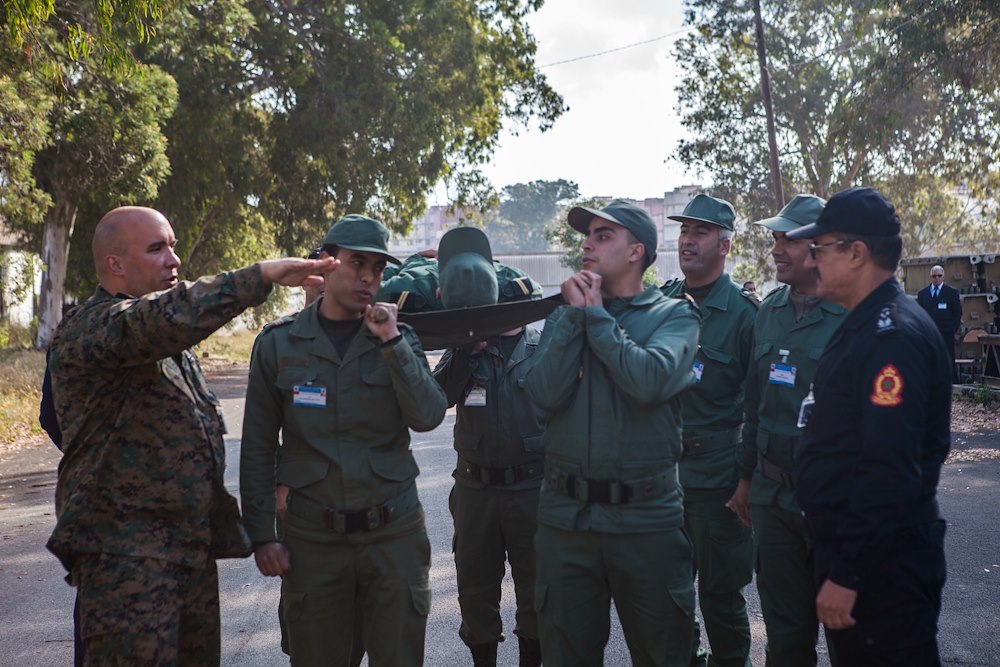
Soldiers with the Royal Moroccan Armed Forces rehearse tactical combat casualty care with a U.S. Navy corpsman with Special Purpose Marine Air-Ground Task Force-Crisis Response-Africa 19.2, Marine Forces Europe and Africa, during Humanitarian Mine Action training at Unite de Secours et Sauvetage’s Base, Kenitra, Morocco, April 22, 2019. The Moroccan soldiers trained alongside the U.S. Marines to identify and properly dispose of explosive ordnance during the HMA. SPMAGTF-CR-AF is deployed to conduct crisis-response and theater-security operations in Africa and promote regional stability by conducting military-military training exercises throughout Europe and Africa. (U.S. Marine Corps photo by Capt. Clay Groover)
Photo by: Capt. Clayton Groover
Photo 4 of 15
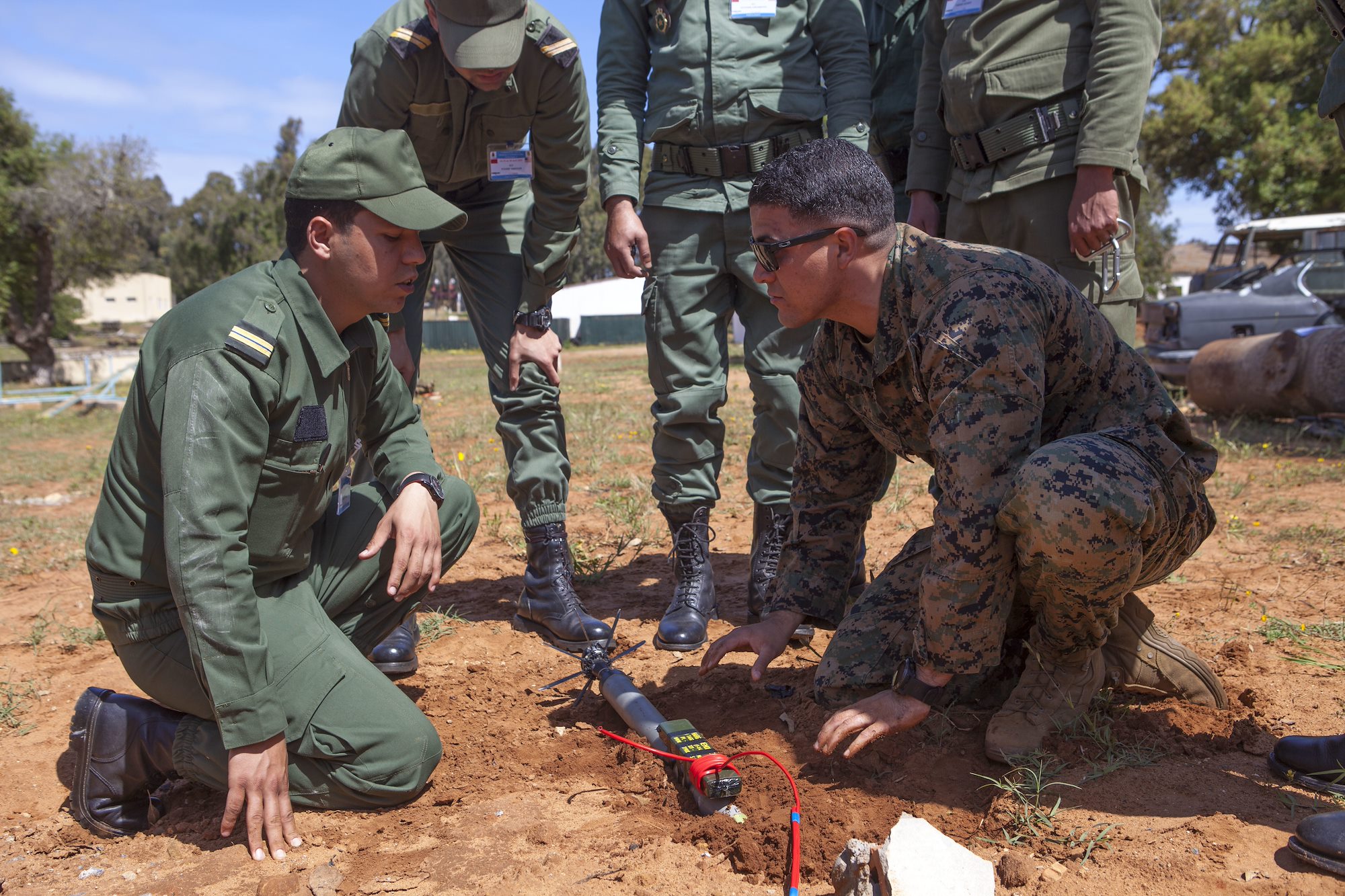
Humanitarian Mine Action increases demining capacity in Morocco
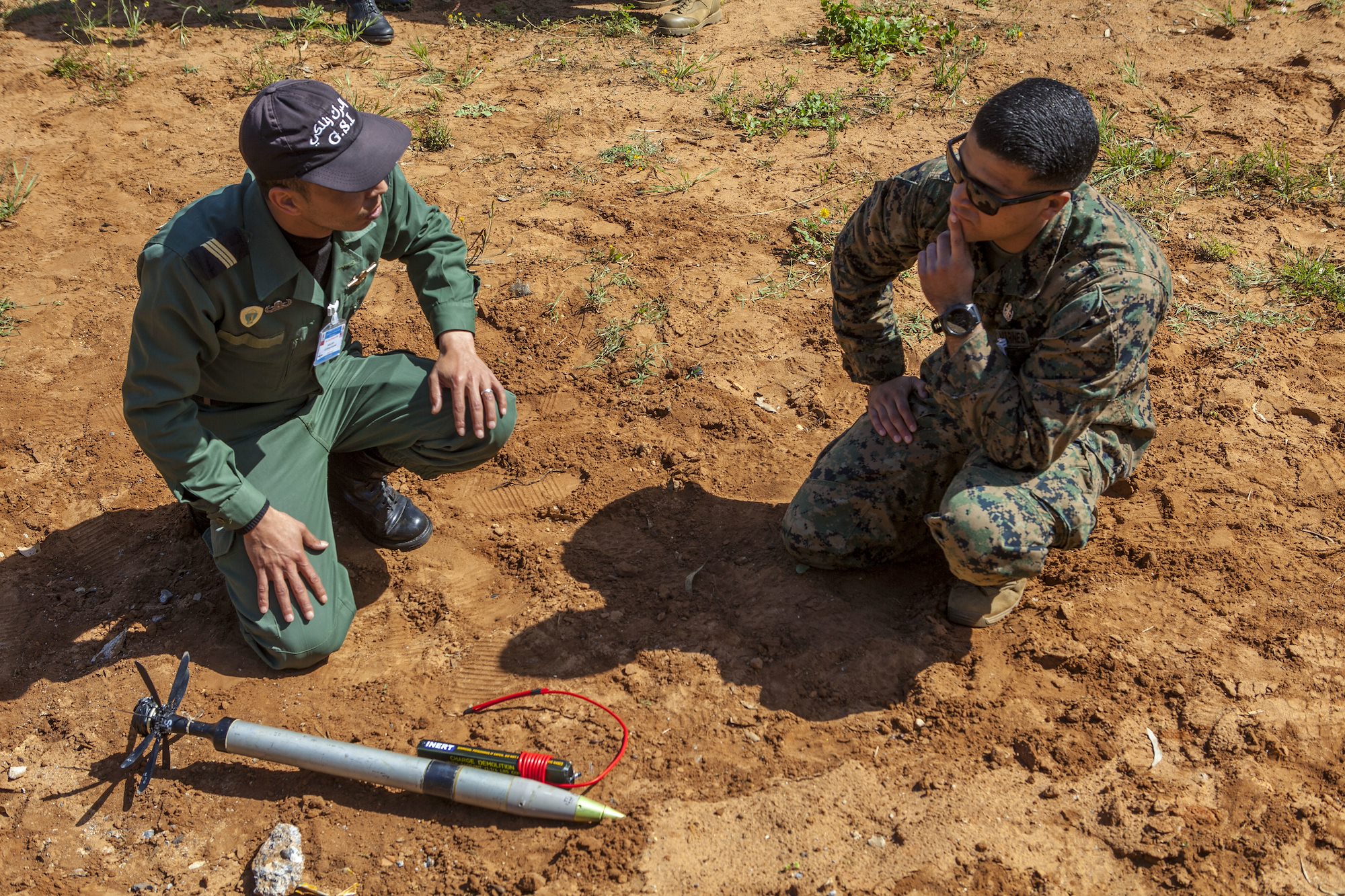
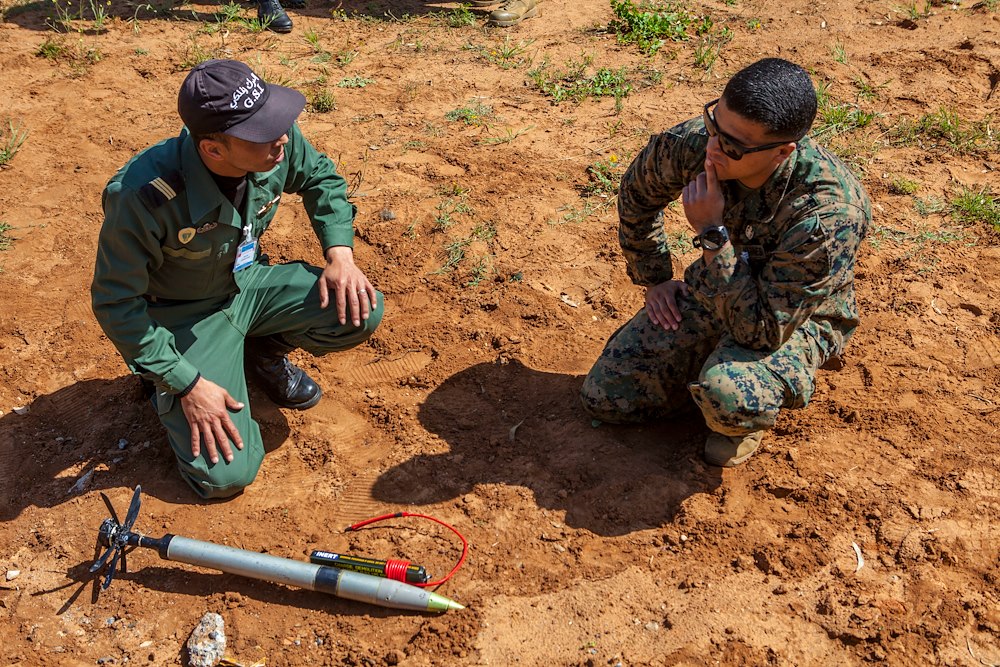
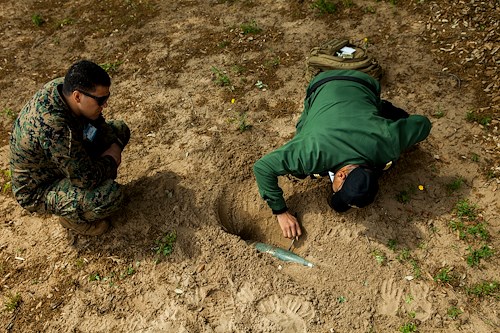
A member of the Moroccan Royal Armed Forces discusses explosive movement procedures with a U.S. Marine with Special Purpose Marine Air-Ground Task Force-Crisis Response-Africa 19.2, Marine Forces Europe and Africa, during Humanitarian Mine Action training at Unite de Secours et Sauvetage’s Base, Kenitra, Morocco, April 25, 2019. The Moroccan Soldiers trained alongside the U.S. Marines and learned how to identify and properly dispose of explosive ordnance. SPMAGTF-CR-AF is deployed to conduct crisis-response and theater-security operations in Africa and promote regional stability by conducting military-to-military training exercises throughout Europe and Africa. (U.S. Marine Corps photo by Capt. Clay Groover)
Photo by: Capt. Clayton Groover
Photo 5 of 15
Humanitarian Mine Action increases demining capacity in Morocco
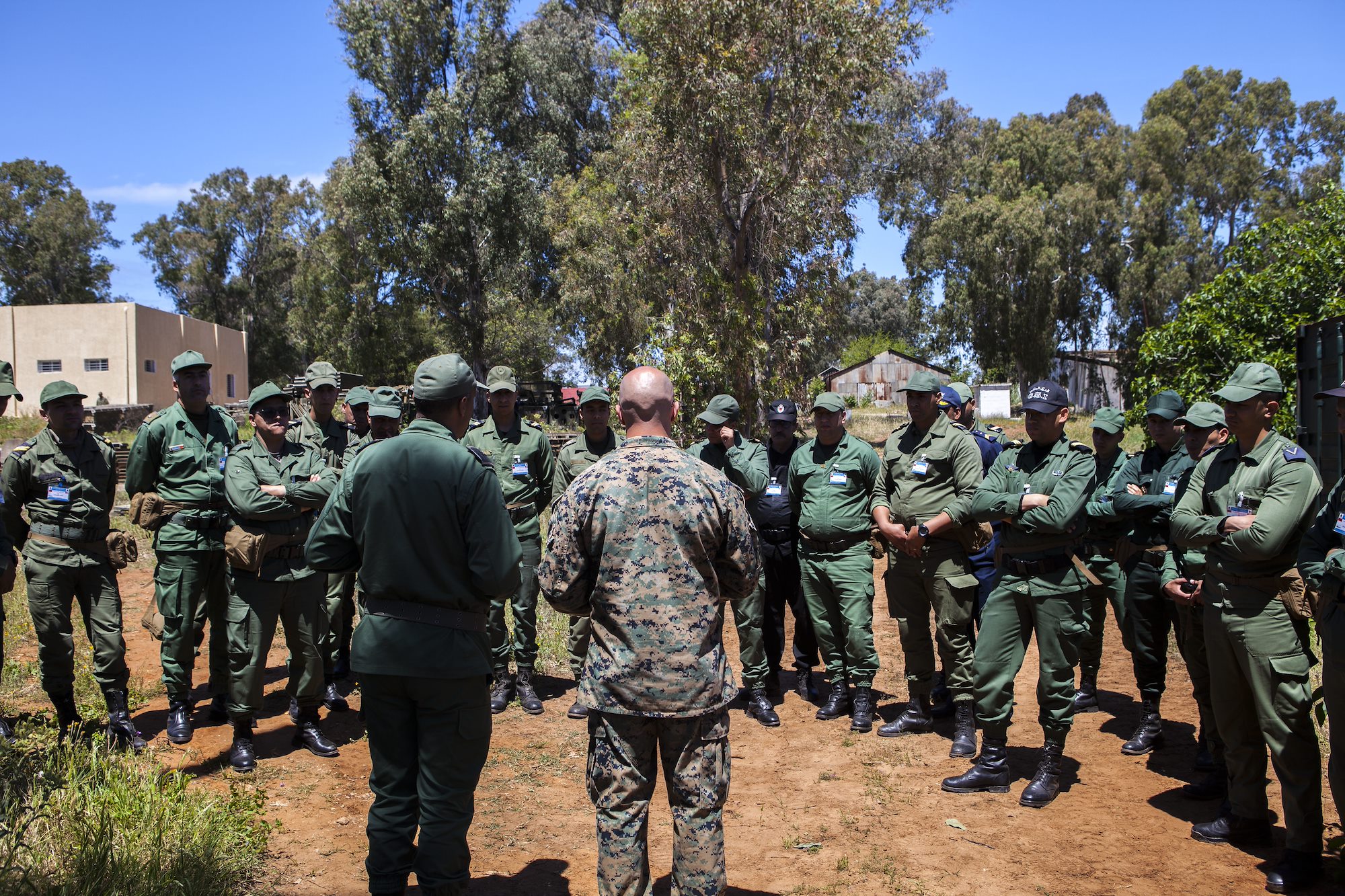
A U.S. Marine with Special Purpose Marine Air-Ground Task Force-Crisis Response-Africa 19.2, Marine Forces Europe and Africa, discusses explosive ordnance disposal procedures with members of the Moroccan Royal Armed Forces during Humanitarian Mine Action training at Unite de Secours et Sauvetage’s Base, Kenitra, Morocco, April 25, 2019. The Moroccan Soldiers trained alongside the U.S. Marines and learned how to identify and properly dispose of explosive ordnance. SPMAGTF-CR-AF is deployed to conduct crisis-response and theater-security operations in Africa and promote regional stability by conducting military-to-military training exercises throughout Europe and Africa. (U.S. Marine Corps photo by Capt. Clay Groover)
Photo by: Capt. Clayton Groover
Photo 6 of 15
Humanitarian Mine Action increases demining capacity in Morocco
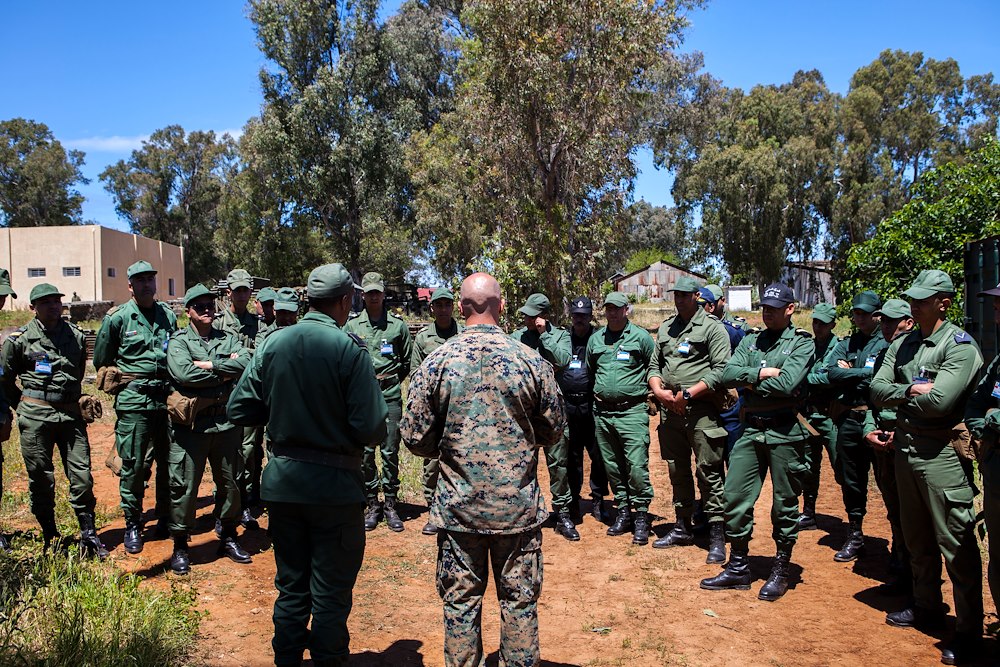
A U.S. Marine with Special Purpose Marine Air-Ground Task Force-Crisis Response-Africa 19.2, Marine Forces Europe and Africa, describes an explosive ordnance-disposal scenario with members of the Moroccan Royal Armed Forces during Humanitarian Mine Action training at Unite de Secours et Sauvetage’s Base, Kenitra, Morocco, April 25, 2019. The Moroccan soldiers trained alongside the U.S. Marines and learned how to identify and properly dispose of explosive ordnance. SPMAGTF-CR-AF is deployed to conduct crisis-response and theater-security operations in Africa and promote regional stability by conducting military-to-military training exercises throughout Europe and Africa. (U.S. Marine Corps photo by Capt. Clay Groover)
Photo by: Capt. Clayton Groover
Photo 7 of 15
Humanitarian Mine Action increases demining capacity in Morocco
A U.S. Marine with Special Purpose Marine Air-Ground Task Force-Crisis Response-Africa 19.2, Marine Forces Europe and Africa, discusses explosive ordnance movement procedures with a member of the Moroccan Royal Armed Forces during Humanitarian Mine Action training at Unite de Secours et Sauvetage’s Base, Kenitra, Morocco, April 24, 2019. The Moroccan Soldiers trained alongside the U.S. Marines and learned how to identify and properly dispose of explosive ordnance. SPMAGTF-CR-AF is deployed to conduct crisis-response and theater-security operations in Africa and promote regional stability by conducting military-to-military training exercises throughout Europe and Africa. (U.S. Marine Corps photo by Capt. Clay Groover)
Photo by: Capt. Clayton Groover
Photo 8 of 15
Humanitarian Mine Action builds demining capacity in Morocco
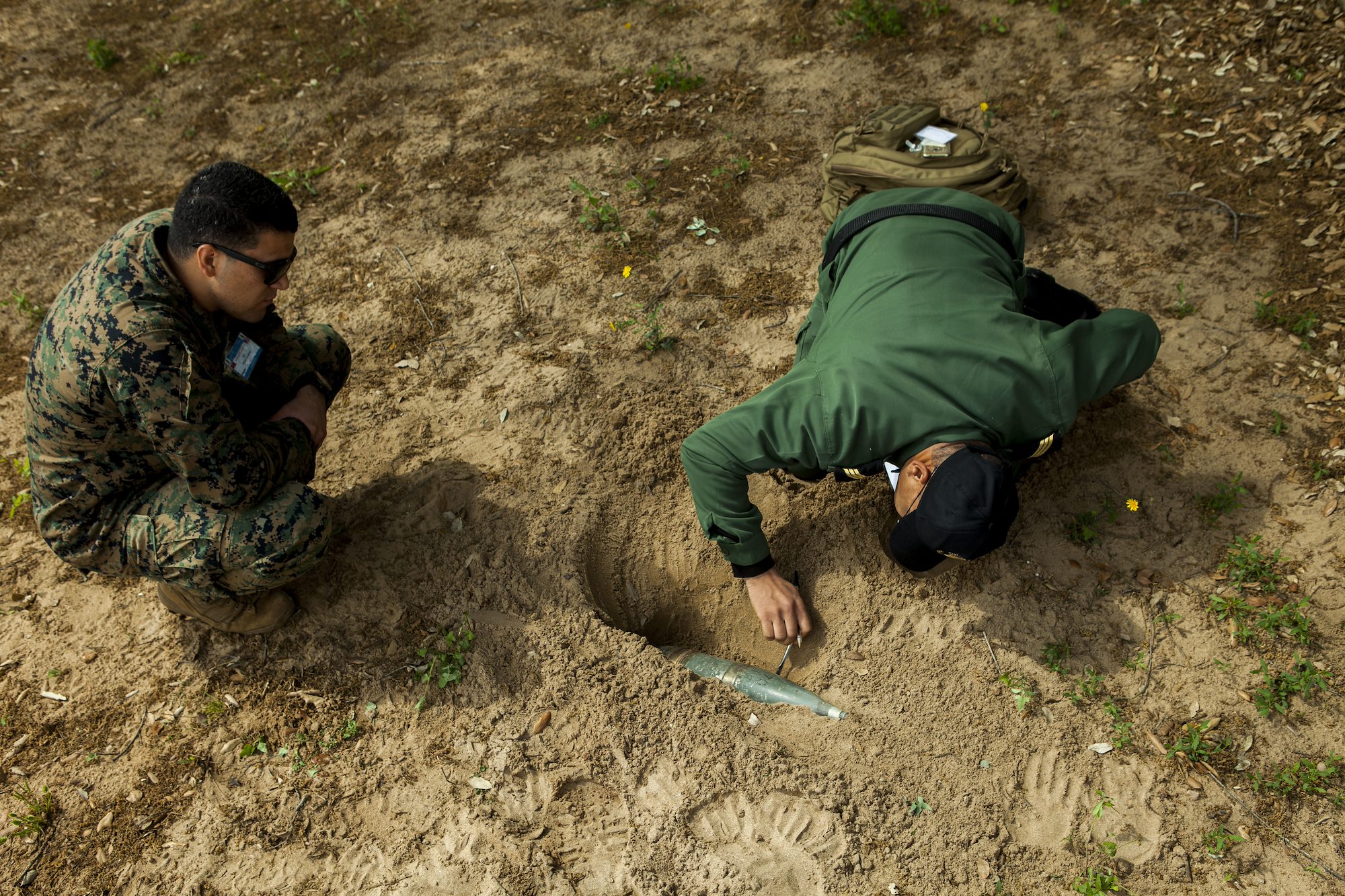
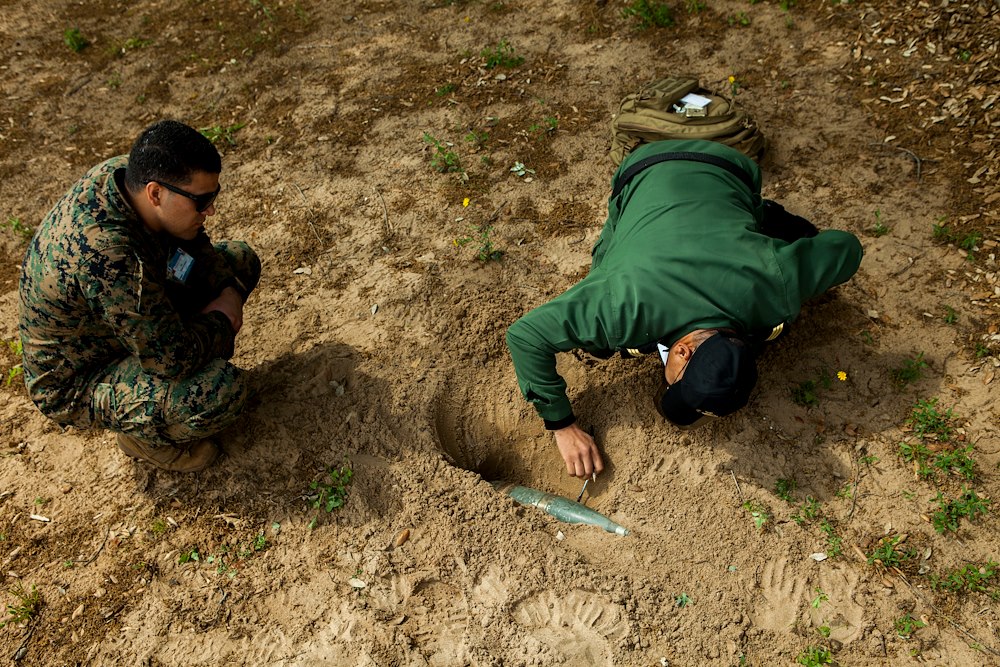
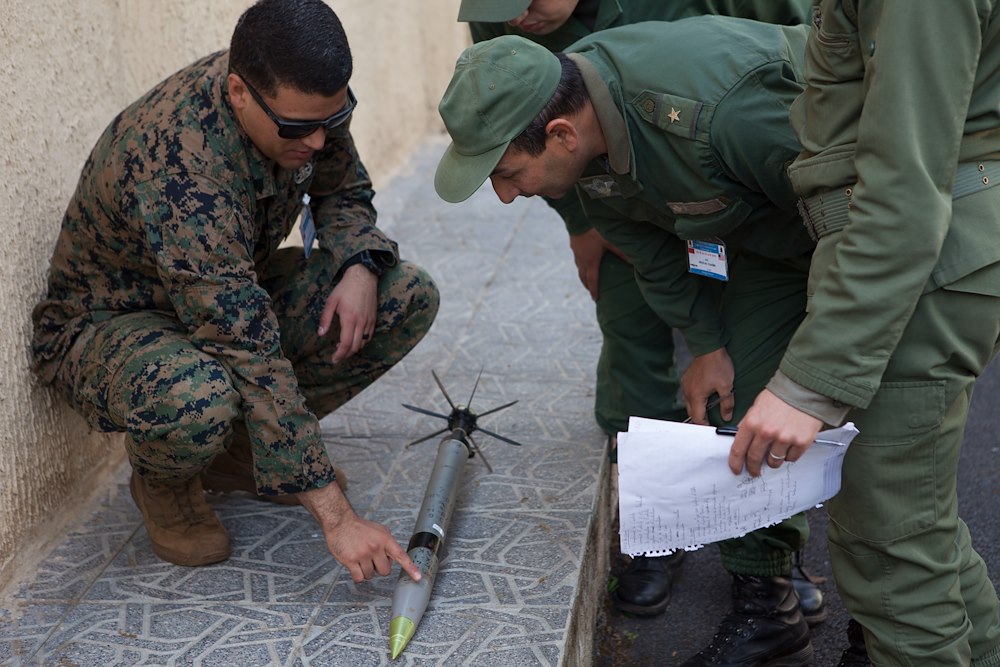
A U.S. Marine with Special Purpose Marine Air-Ground Task Force-Crisis Response-Africa 19.2, Marine Forces Europe and Africa, discusses explosive ordnance identification procedures with a member of the Moroccan Royal Armed Forces during Humanitarian Mine Action training at Unite de Secours et Sauvetage’s Base, Kenitra, Morocco, April 22, 2019. The Moroccan soldiers trained alongside the U.S. Marines in order to identify and properly dispose of explosive ordnance. SPMAGTF-CR-AF is deployed to conduct crisis-response and theater-security operations in Africa and promote regional stability by conducting military-military training exercises throughout Europe and Africa. (U.S. Marine Corps photo by Capt. Clay Groover)
Photo by: Capt. Clayton Groover
Photo 9 of 15
Humanitarian Mine Action builds demining capacity in Morocco
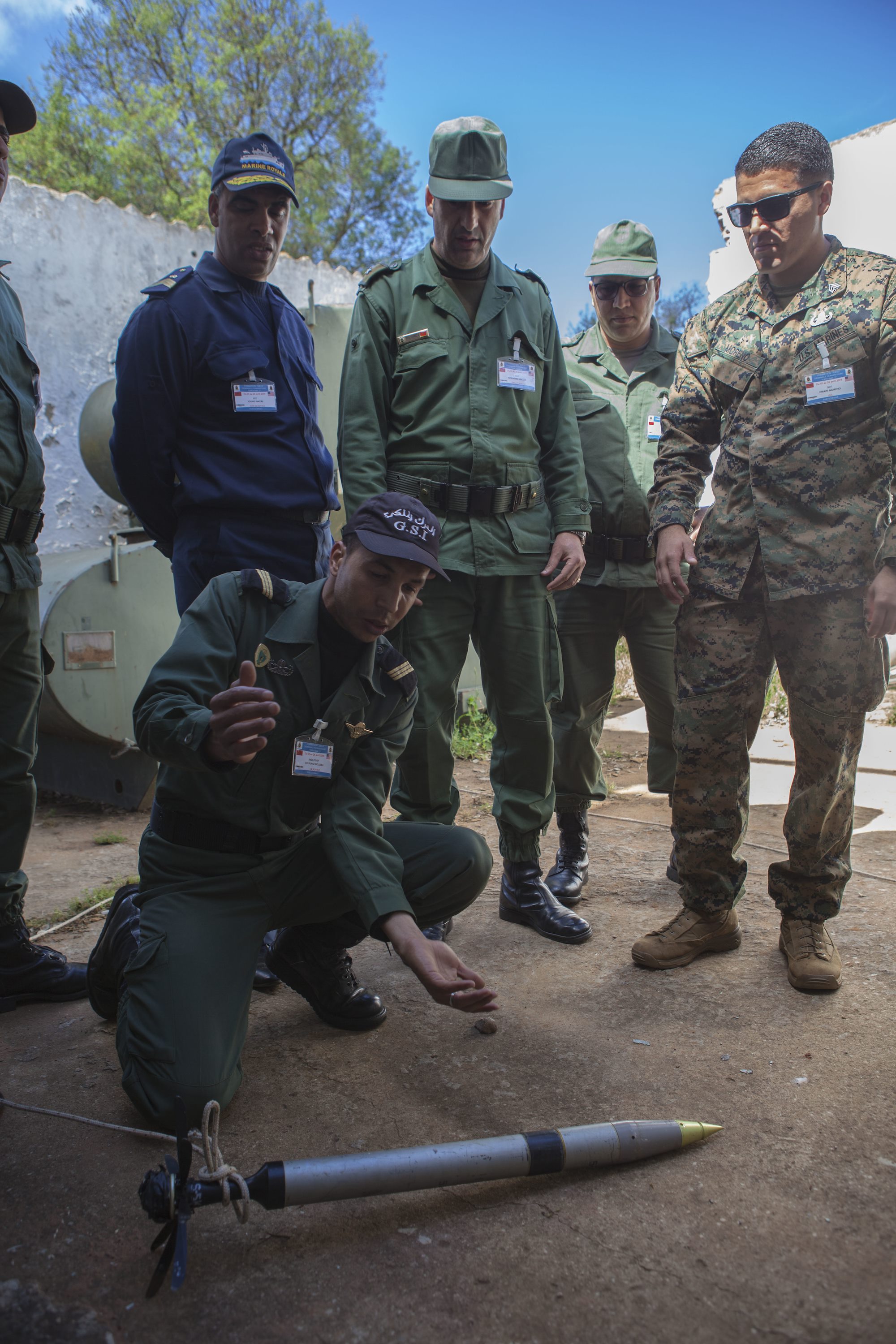
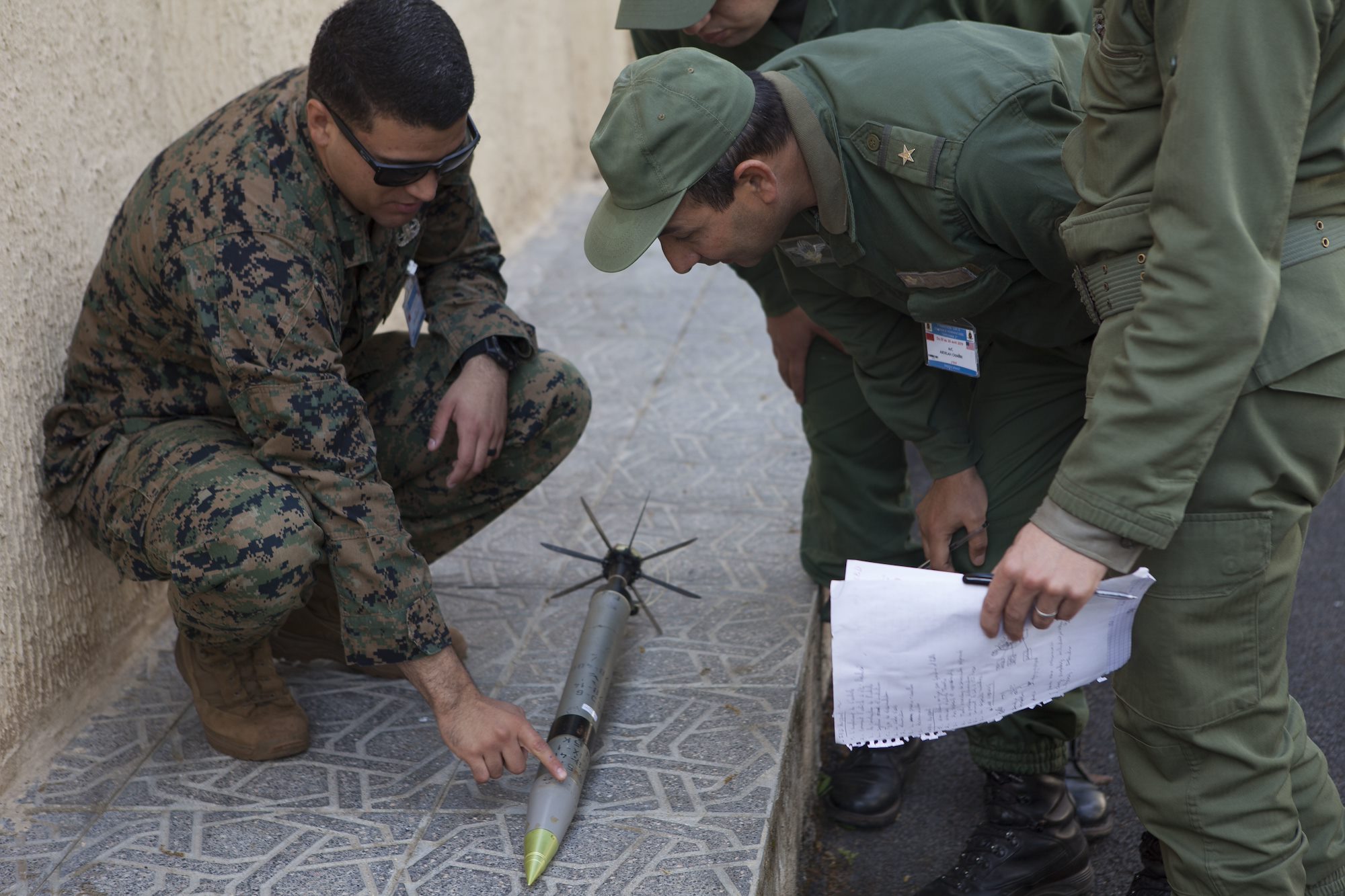
A U.S. Marine with Special Purpose Marine Air-Ground Task Force-Crisis Response-Africa 19.2, Marine Forces Europe and Africa, demonstrates explosive ordnance identification procedures with members of the Moroccan Royal Armed Forces during Humanitarian Mine Action training at Unite de Secours et Sauvetage’s Base, Kenitra, Morocco, April 22, 2019. The Moroccan soldiers trained alongside the U.S. Marines in order to identify and properly dispose of explosive ordnance. SPMAGTF-CR-AF is deployed to conduct crisis-response and theater-security operations in Africa and promote regional stability by conducting military-military training exercises throughout Europe and Africa. (U.S. Marine Corps photo by Capt. Clay Groover)
Photo by: Capt. Clayton Groover
Photo 10 of 15
Humanitarian Mine Action increases demining capacity in Morocco
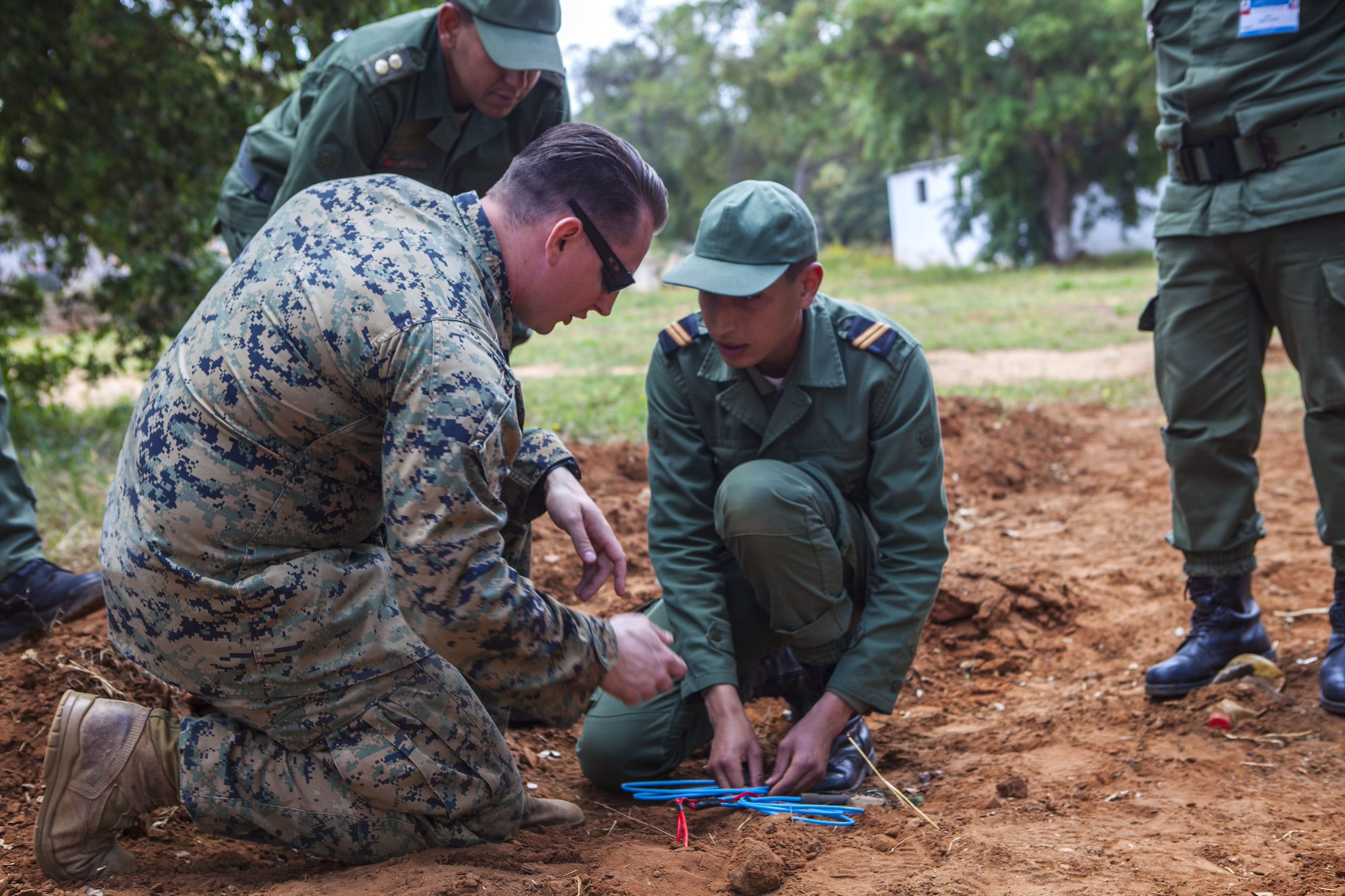
A member of the Moroccan Royal Armed Forces moves an inert ordnance item during Humanitarian Mine Action training at Unite de Secours et Sauvetage’s Base, Kenitra, Morocco, April 25, 2019. The Moroccan Soldiers trained alongside U.S. Marines with Special Purpose Marine Air-Ground Task Force-Crisis Response-Africa, Marine Forces Europe and Africa, and learned how to identify and properly dispose of explosive ordnance. SPMAGTF-CR-AF 19.2 is deployed to conduct crisis-response and theater-security operations in Africa and promote regional stability by conducting military-to-military training exercises throughout Europe and Africa. (U.S. Marine Corps photo by Capt. Clay Groover)
Photo by: Capt. Clayton Groover
Photo 11 of 15
Humanitarian Mine Action increases demining capacity in Morocco
A U.S. Marine with Special Purpose Marine Air-Ground Task Force-Crisis Response-Africa 19.2, Marine Forces Europe and Africa, discusses explosive ordnance disposal procedures with members of the Moroccan Royal Armed Forces during Humanitarian Mine Action training at Unite de Secours et Sauvetage’s Base, Kenitra, Morocco, April 24, 2019. The Moroccan Soldiers trained alongside the U.S. Marines and learned how to identify and properly dispose of explosive ordnance. SPMAGTF-CR-AF is deployed to conduct crisis-response and theater-security operations in Africa and promote regional stability by conducting military-to-military training exercises throughout Europe and Africa. (U.S. Marine Corps photo by Capt. Clay Groover)
Photo by: Capt. Clayton Groover
Photo 12 of 15
Humanitarian Mine Action increases demining capacity in Morocco
A U.S. Marine with Special Purpose Marine Air-Ground Task Force-Crisis Response-Africa 19.2, Marine Forces Europe and Africa, discusses explosive ordnance disposal procedures with members of the Moroccan Royal Armed Forces during Humanitarian Mine Action training at Unite de Secours et Sauvetage’s Base, Kenitra, Morocco, April 25, 2019. The Moroccan Soldiers trained alongside the U.S. Marines and learned how to identify and properly dispose of explosive ordnance. SPMAGTF-CR-AF 19.2 is deployed to conduct crisis-response and theater-security operations in Africa and promote regional stability by conducting military-to-military training exercises throughout Europe and Africa. (U.S. Marine Corps photo by Capt. Clay Groover)
Photo by: Capt. Clayton Groover
Photo 13 of 15
Humanitarian Mine Action builds demining capacity in Morocco
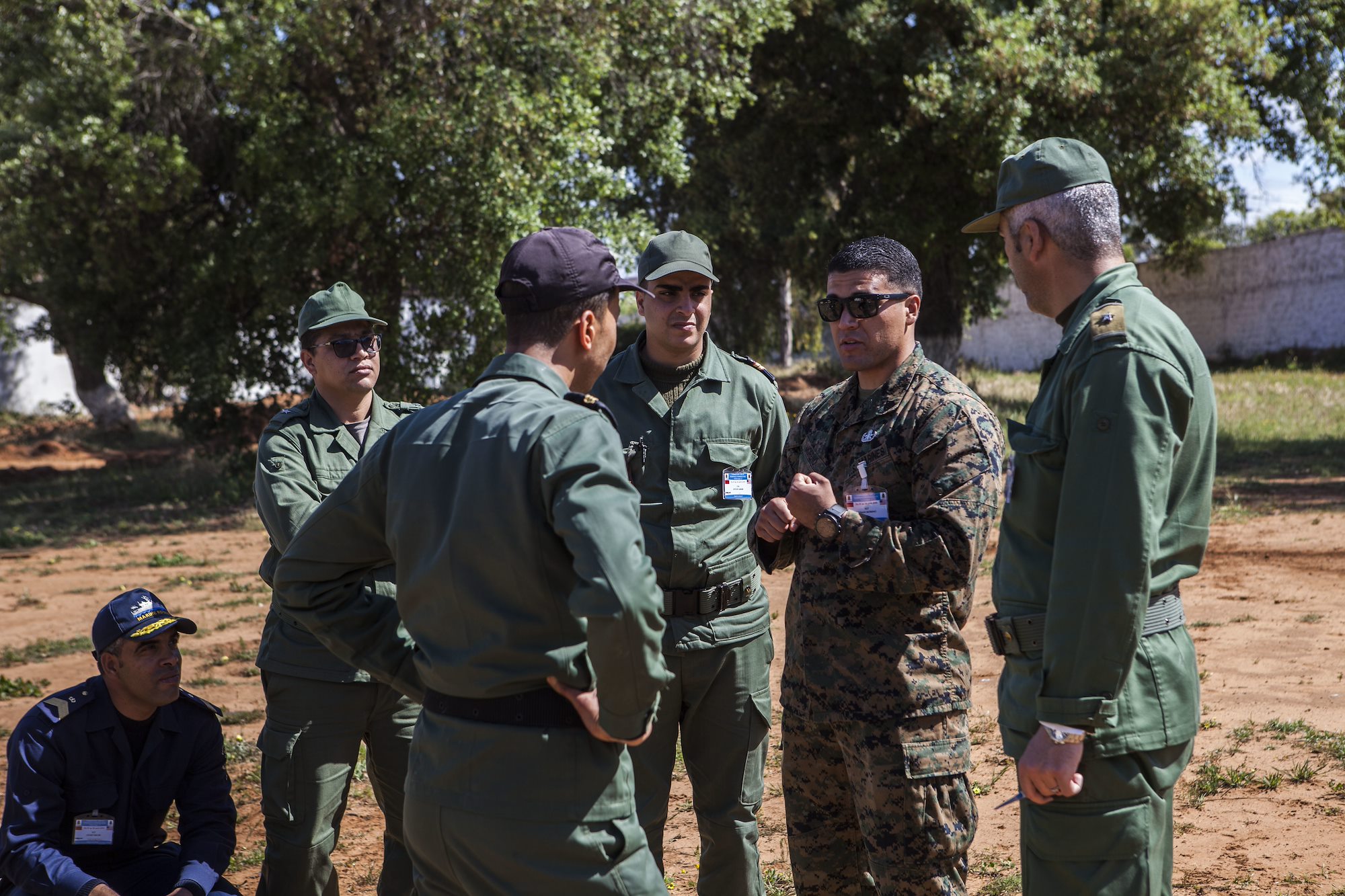
A U.S. Marine with Special Purpose Marine Air-Ground Task Force-Crisis Response-Africa 19.2, Marine Forces Europe and Africa, discusses explosive ordnance identification procedures with members of the Moroccan Royal Armed Forces during Humanitarian Mine Action training at Unite de Secours et Sauvetage’s Base, Kenitra, Morocco, April 22, 2019. The Moroccan soldiers trained alongside the U.S. Marines in order to identify and properly dispose of explosive ordnance. SPMAGTF-CR-AF is deployed to conduct crisis-response and theater-security operations in Africa and promote regional stability by conducting military-military training exercises throughout Europe and Africa. (U.S. Marine Corps photo by Capt. Clay Groover)
Photo by: Capt. Clayton Groover
Photo 14 of 15
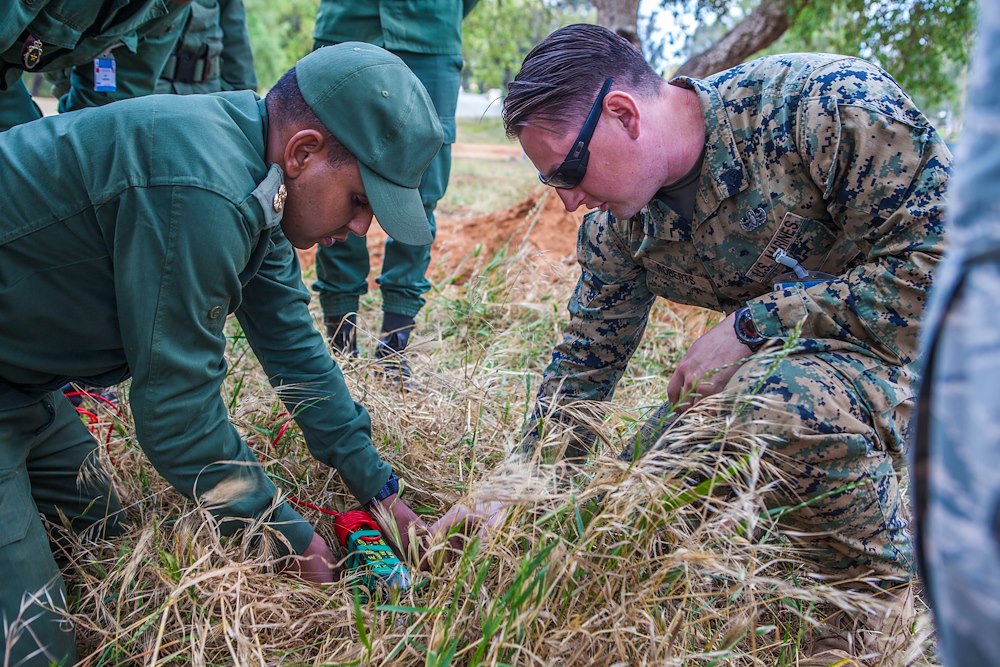
Humanitarian Mine Action builds demining capacity in Morocco
A U.S. Marine with Special Purpose Marine Air-Ground Task Force-Crisis Response-Africa 19.2, Marine Forces Europe and Africa, discusses detonating cord emplacement procedures with a member of the Moroccan Royal Armed Forces during Humanitarian Mine Action training at Unite de Secours et Sauvetage’s Base, Kenitra, Morocco, April 22, 2019. The Moroccan soldiers trained alongside the U.S. Marines in order to identify and properly dispose of explosive ordnance. SPMAGTF-CR-AF is deployed to conduct crisis-response and theater-security operations in Africa and promote regional stability by conducting military-military training exercises throughout Europe and Africa. (U.S. Marine Corps photo by Capt. Clay Groover)
Photo by: Capt. Clayton Groover
Photo 15 of 15
Humanitarian Mine Action builds demining capacity in Morocco
A U.S. Marine with Special Purpose Marine Air-Ground Task Force-Crisis Response-Africa 19.2, Marine Forces Europe and Africa, discusses explosive ordnance identification procedures with members of the Moroccan Royal Armed Forces during Humanitarian Mine Action training at Unite de Secours et Sauvetage’s Base, Kenitra, Morocco, April 22, 2019. The Moroccan soldiers trained alongside the U.S. Marines in order to identify and properly dispose of explosive ordnance. SPMAGTF-CR-AF is deployed to conduct crisis-response and theater-security operations in Africa and promote regional stability by conducting military-military training exercises throughout Europe and Africa. (U.S. Marine Corps photo by Capt. Clay Groover)
Photo by: Capt. Clayton Groover
KENITRA, Morocco – U.S. Marines and Sailors with Special Purpose Marine Air-Ground Task Force-Crisis Response-Africa 19.2, Marine Forces Europe and Africa, participated in Humanitarian Mine Action with members of the Moroccan Royal Armed Forces April 1-26, 2019, at Unite de Secours et Sauvetage’s Base, Kenitra, Morocco.
The HMA program is designed to assist allied and partner countries in reducing landmines and explosives that threaten civilian population, according to the U.S. State Department website. In order to further this effort in Morocco, U.S. Marine Corps explosive ordnance disposal technicians and a U.S. Navy corpsman trained alongside the Moroccan Royal Armed Forces for four weeks, instructing their Moroccan partners on proper ordnance disposal techniques and tactical combat casualty care.
“The goal at the beginning of the course was to conduct a refresher on basic demolition practices and ordnance identification,” said U.S. Marine Sgt. James Roberts, an EOD technician with SMPAGTF-CR-AF 19.2. “We were here to instruct HMA level two, which teaches the students about fuse functioning and how to conduct reconnaissance and research on an ordnance item.”
After the refresher training, the U.S. Marine instructors put their Moroccan Royal Armed Forces counterparts through multiple complex scenarios to test their knowledge of the subject matter and to have the students make decisions in real time.
“We started off in the classroom with a quick overview of HMA level one,” said U.S. Marine Sgt. Efrain Moreno, an EOD technician with SPMAGTF-CR-AF 19.2. “During the second week we went in depth on how fuses function. This type of training gave the students a deeper respect for how ordnance items work.”
During the scenarios, the students would go downrange with their gear, conduct reconnaissance on the inert explosives, and take measurements and pictures in order to get a good understanding of the type of ordnance they were dealing with. After the students executed reconnaissance of the inert items, they returned to the classroom to reference their learning material in order to identify the type of ordnance they were dealing with. The students would then rehearse procedures to dispose of the item.
“A lot of the scenarios were designed to have the students dispose of the item, either by [notionally] blowing it in place or moving it,” said U.S. Marine Staff Sgt. Jay Lorenzo, an EOD technician with SPMAGTF-CR-AF 19.2. “We wanted to ensure they had a firm understanding on how to dispose of the item properly and determine the safest way to do that. If they had to move the item, then they had to determine how to move it and the safest way to go about moving it.”
The trainers also incorporated medical training into the HMA course, which included tactical combat-casualty care and combat lifesaving skills. This allowed the students to gain experience dealing with combat-related injuries they could encounter during an EOD scenario.
“We taught the basic combat lifesaving skills, how to improvise, and how to treat specific casualties,” said U.S. Navy Petty Officer 1st Class Andres Caldas, a corpsman with SPMAGTF-CR-AF 19.2. “The students were very receptive and they wanted to know more. They were eager to learn and they liked the hands-on experience.”
While the students and instructors enjoyed their time together and learned from each other, the importance of the training was not lost throughout the HMA. Both the U.S. and Moroccan service members were well aware of the dangers associated with the job.
“In the end, it’s about sacrifice,” said Warrant Officer Lee Bowden, an EOD officer with SPMAGTF-CR-AF 19.2. “Every piece of ordnance destroyed equals another life saved.”