Gallery contains 6 images
×
Photo 1 of 6
Combined Joint Task Force - Horn
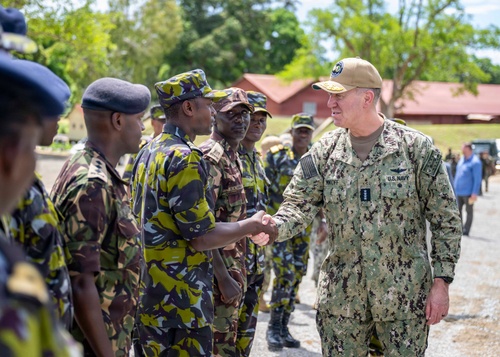
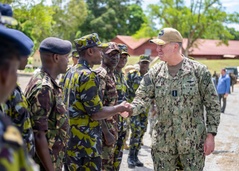
U.S. Air Force Gen. Dagvin Anderson, commander, U.S. Africa Command (AFRICOM), and AFRICOM senior leaders, conducted a series of high-level visits to Africa with stops in Ethiopia and Somalia’s member states of Somaliland and Puntland, Nov. 23-27, 2025. The visits were part of an East Africa trip aimed to strengthen America’s strategic approach to confronting terrorism through mutual engagement, stronger cooperation, and aligned security priorities. (U.S. Army photo by Sgt. 1st Class Kenneth Tucceri)
Photo by: Sgt. 1st Class Kenneth Tucceri
Photo 2 of 6
Combined Joint Task Force - Horn
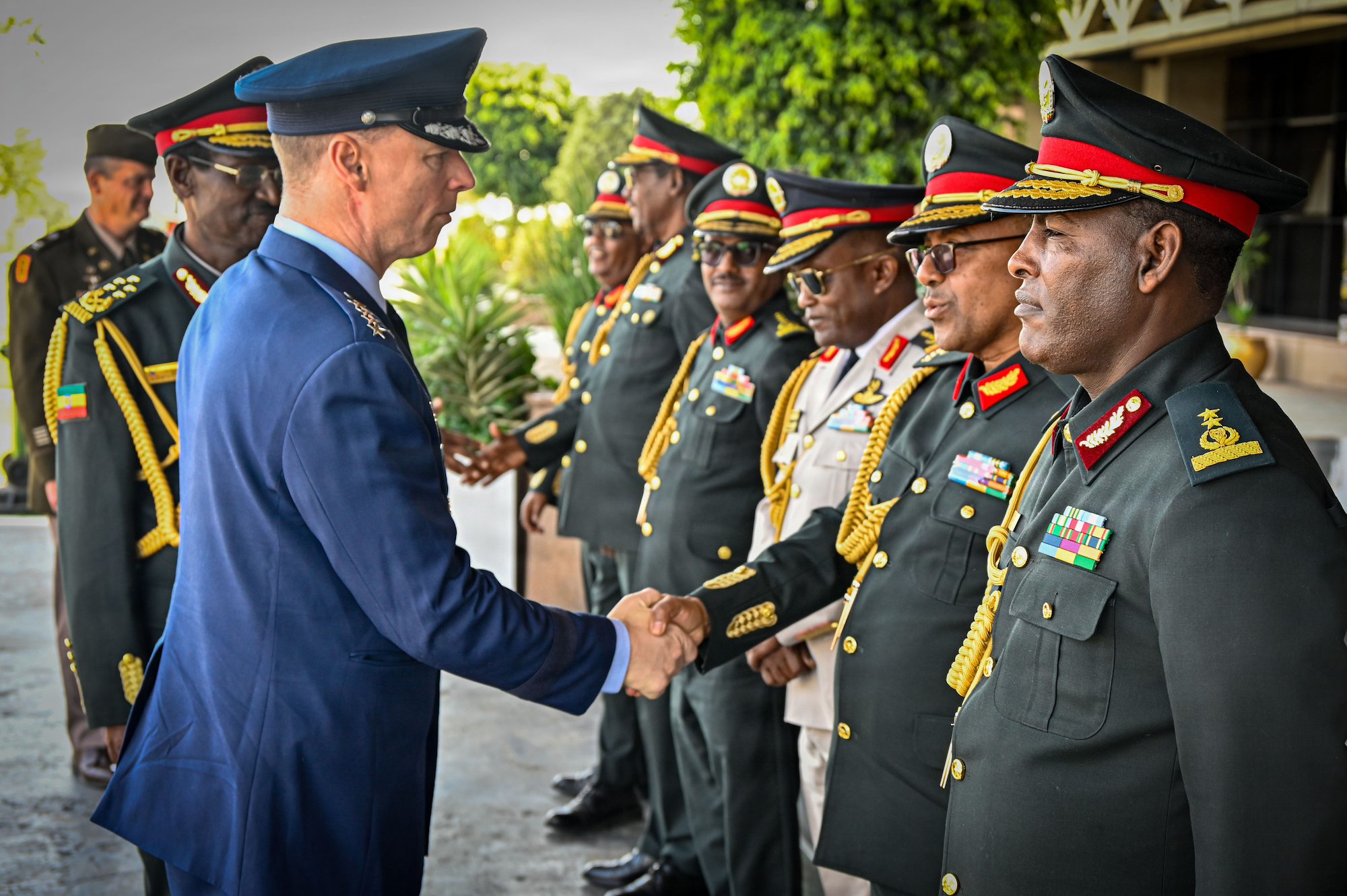
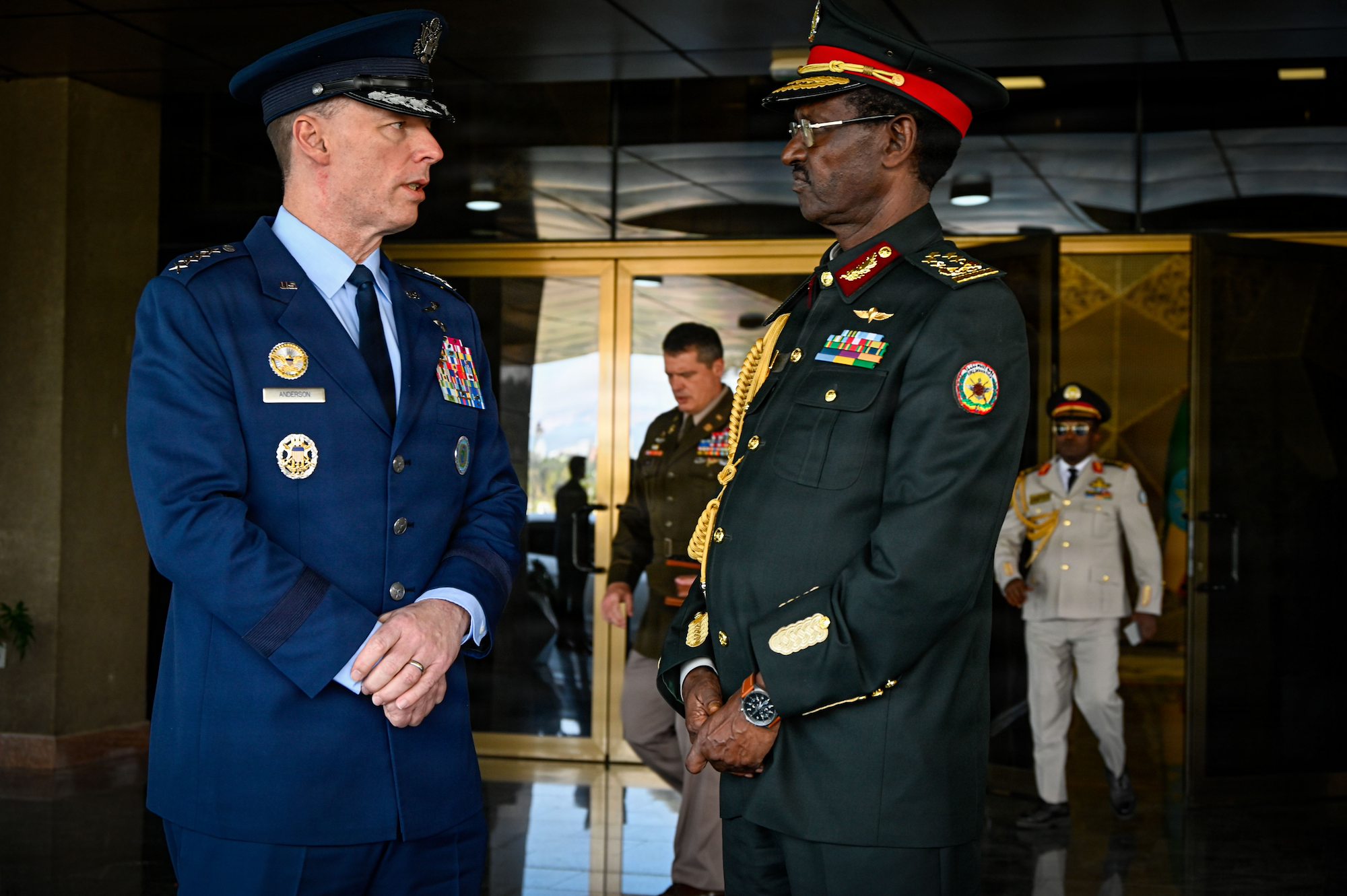
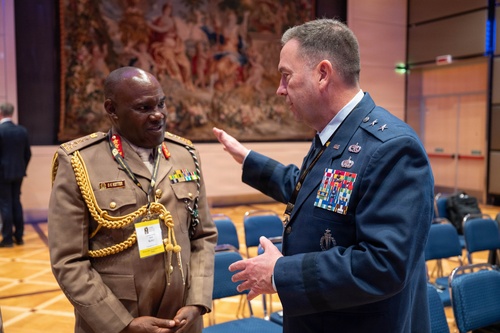
U.S. Air Force Gen. Dagvin Anderson, commander, U.S. Africa Command (AFRICOM), meets with Field Marshal Birhanu Jula Gelelcha, chief of defense of the Ethiopian National Defense Force, in Addis Ababa, Ethiopia, Nov. 25, 2025. Anderson, along with AFRICOM senior leaders, conducted a high-level meeting with Ethiopian National Defense Force leadership to discuss AFRICOM’s focus on building partner capacity amongst regional threats. (U.S. Army photo by Cpt. Ubon Mendie)
Photo by: Sgt. 1st Class Kenneth Tucceri
Photo 3 of 6
Combined Joint Task Force - Horn
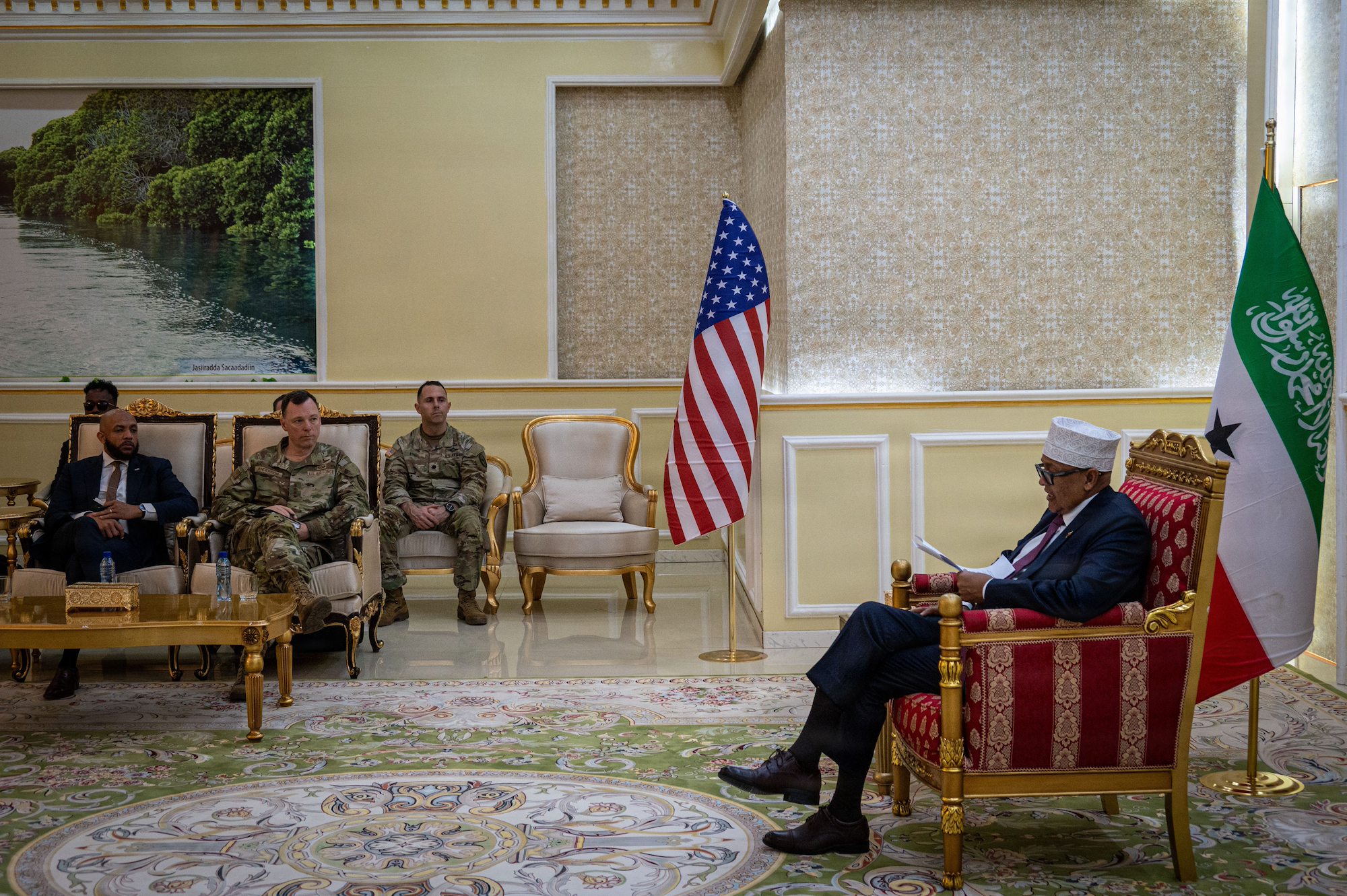
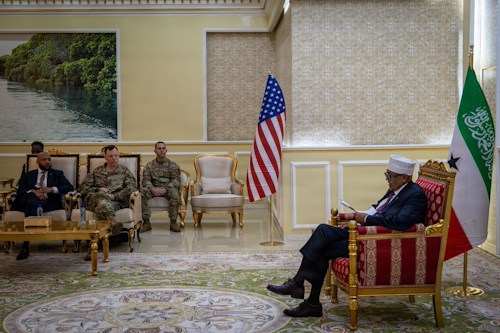
U.S. Air Force Gen. Dagvin Anderson, commander, U.S. Africa Command (AFRICOM), and AFRICOM senior leaders meet with Somaliland’s President Abdirahman Mohamed Abdullahi and Somaliland senior government and military leadership to discuss shared security objectives in Hargeisa, Somaliland, Nov. 26, 2025. During the engagement, Anderson emphasized that countering terrorism is a shared responsibility that no single nation can shoulder alone. (U.S. Army photo by Sgt. 1st Class Kenneth Tucceri)
Photo by: Sgt. 1st Class Kenneth Tucceri
Photo 4 of 6
Combined Joint Task Force - Horn
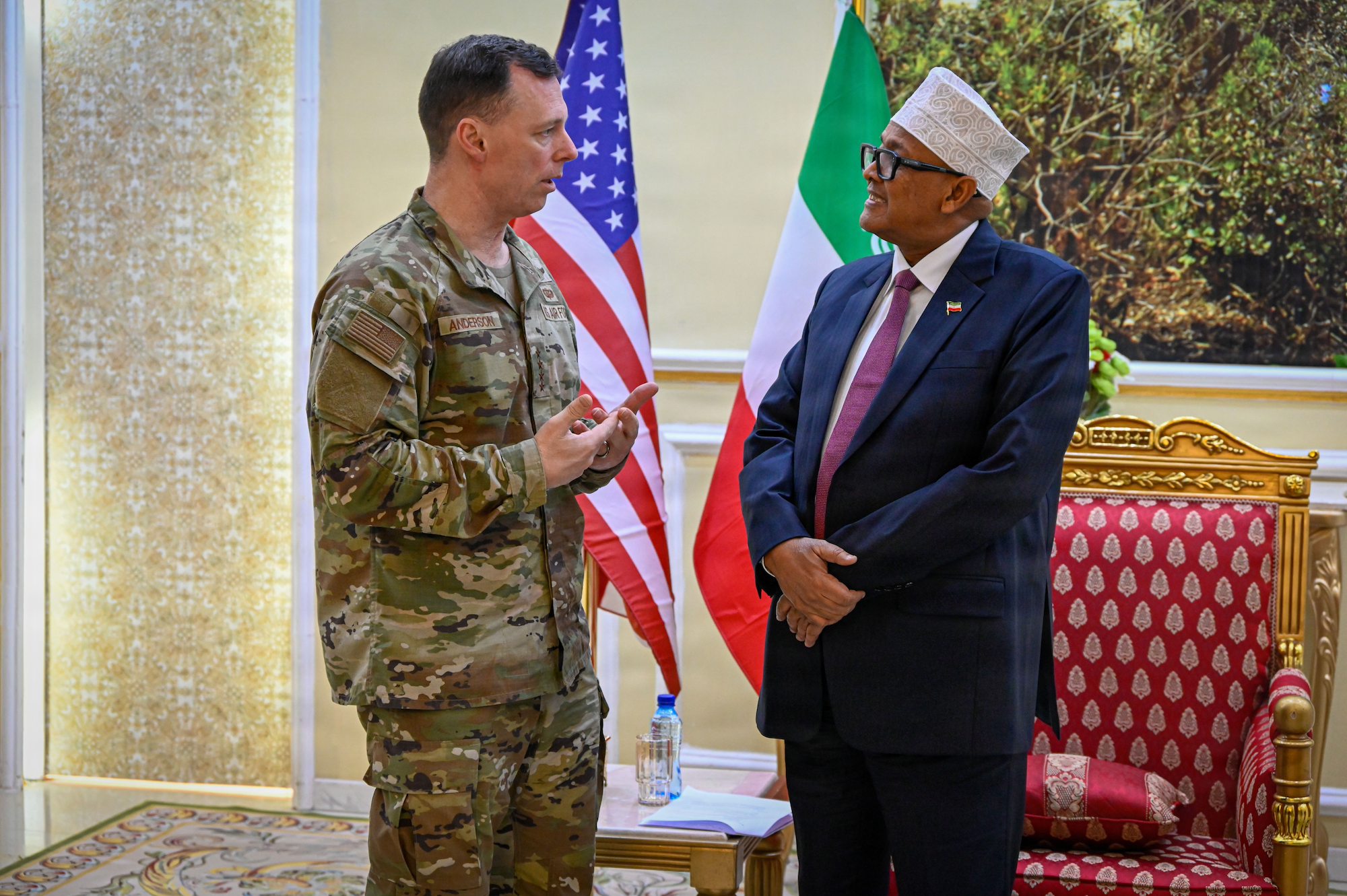
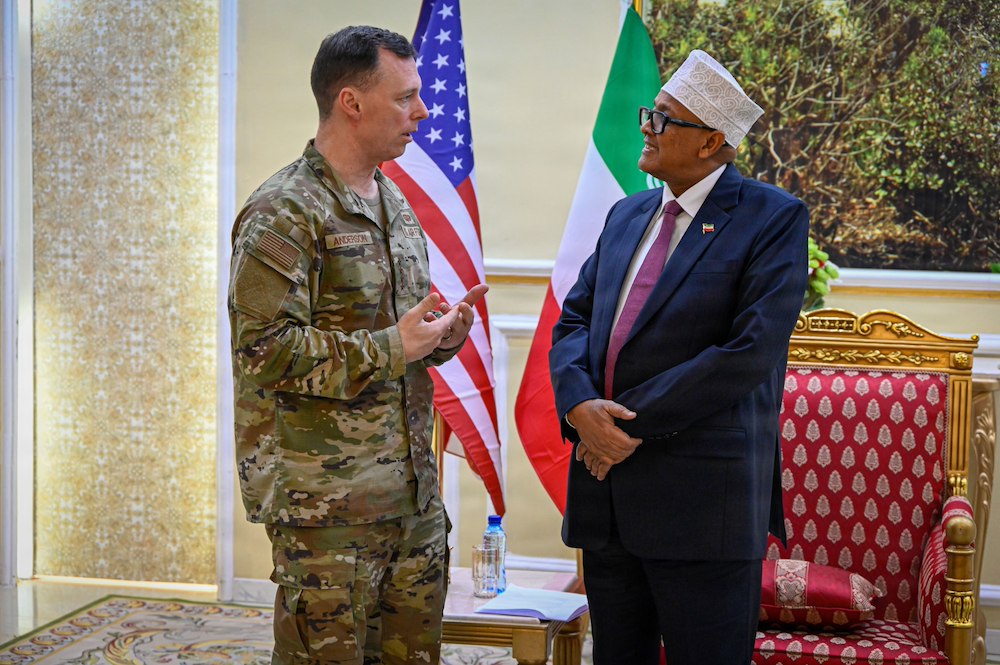
U.S. Air Force Gen. Dagvin Anderson, commander, U.S. Africa Command (AFRICOM), meets with President Abdirahman Mohamed Abdullahi, president of Somaliland, in Hargeisa, Somaliland, Nov. 26, 2025. The meeting was part of Gen. Anderson’s trip in East Africa to meet with government and defense leaders to strengthen America’s strategic approach to confronting terrorism through mutual engagement, stronger cooperation, and aligned security priorities. (U.S. Army photo by Cpt. Ubon Mendie)
Photo by: Sgt. 1st Class Kenneth Tucceri
Photo 5 of 6
Combined Joint Task Force - Horn
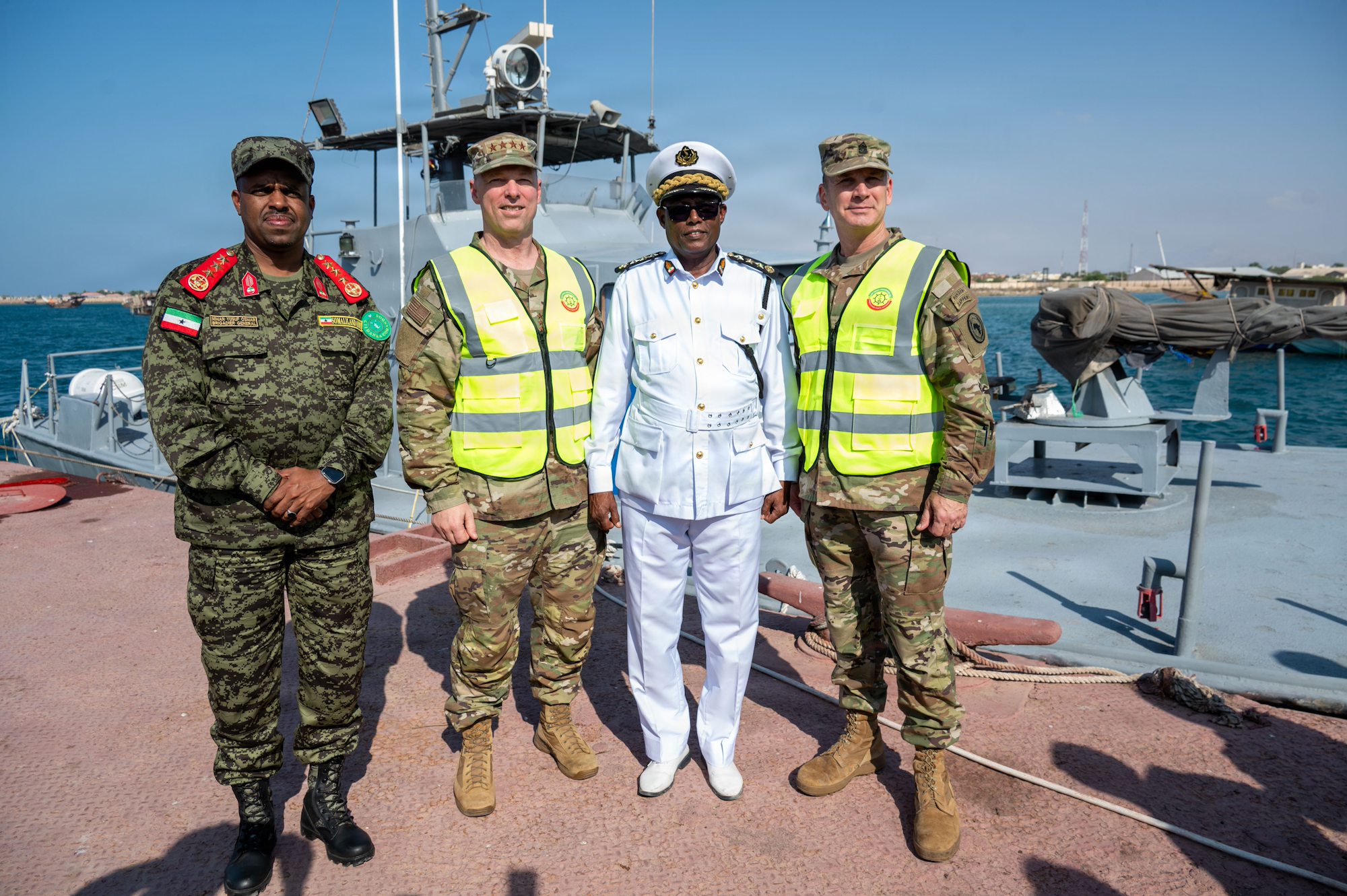
U.S. Air Force Gen. Dagvin Anderson, commander, U.S. Africa Command (AFRICOM), and AFRICOM senior leaders tour the Port of Berbera to assess the security environment and review the port’s operational capacity in Berbera, Somaliland, Nov. 26, 2025. The visit was part of an East Africa trip which featured stops in Addis Ababa, Ethiopia, Hargeisa, Somaliland and Bosaso in Somalia’s member state of Puntland. (U.S. Army photo by Sgt. 1st Class Kenneth Tucceri)
Photo by: Sgt. 1st Class Kenneth Tucceri
Photo 6 of 6
Combined Joint Task Force - Horn
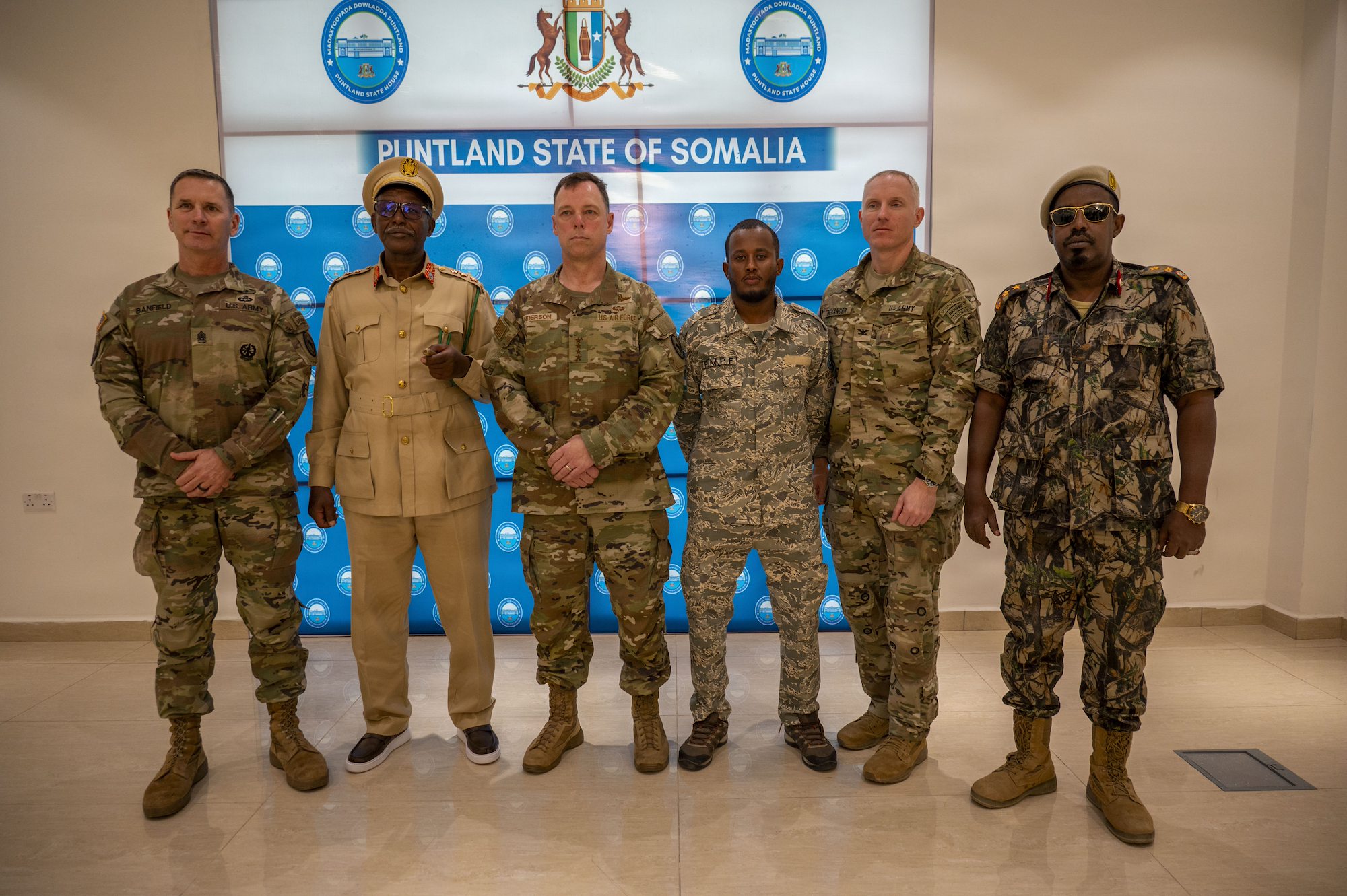
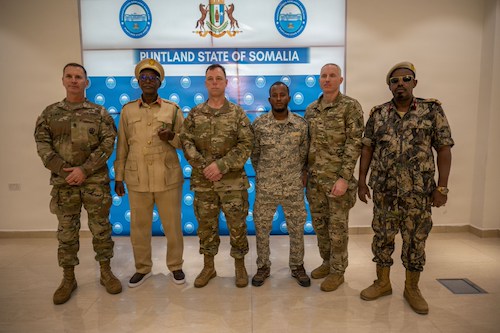
U.S. Air Force Gen. Dagvin Anderson, commander, U.S. Africa Command (AFRICOM), U.S. Army Command Sgt. Maj. Garric Banfield, AFRICOM command senior enlisted leader, and AFRICOM senior leaders pose for a photo with U.S. and Puntland Defense Force leadership, including Gen. Adan Abdi Hashi, chief of defense forces, Puntland Defense Forces, after a meeting with the vice president of Somalia’s member state of Puntland Vice President Ilyas Osman Lugatoor, Nov. 27, 2025, in Bosaso, Puntland, Somalia. During the meeting Anderson praised Puntland’s maximum-pressure campaign against ISIS in the Golis Mountains. (U.S. Army photo by Sgt. 1st Class Kenneth Tucceri)
Photo by: Sgt. 1st Class Kenneth Tucceri
Gen. Dagvin Anderson, the Commander of U.S. Africa Command, began the first leg of a series of high-level visits to Africa this week, with stops in Ethiopia and in Somalia’s member states of Somaliland and Puntland.
His message was clear: the United States supports maximum pressure on ISIS, al-Shabaab, and other violent terrorist organizations.
The trip - aligned with President Trump’s priorities and Secretary of War Hegseth’s guidance - is part of a deliberate push to reinforce America’s commitment to countering terrorist groups across the continent, in support of a focus on protecting the United States homeland.
“The whole reason I came here is because we have shared threats,” Anderson said. “I’m not new to this region; I understand what the issues are, and we’re here to help empower our African partners to address these threats in a united way.”
Anderson met with government leaders to strengthen America’s laser-focused approach to confronting terrorism through burden sharing, stronger cooperation, and aligned security priorities.
In Ethiopia, he met with Prime Minister Abiy Ahmed and the Chief of Defense, Field Marshal Birhanu Jula Gelelcha, to discuss the growing threat posed by ISIS and al-Shabaab.
In Somaliland, Anderson met with President Abdirahman Mohamed Abdullahi, Brig. Gen. Niman Yusuf Osman, chief of general staff of the Somaliland Armed Forces, and Adm. Ahmed Hurre Hariye, commander of the Somaliland Coast Guard. He also traveled to the port city of Berbera to assess the security environment and review the port’s operational capacity.
His final stop was Puntland, where he met with Vice President Ilyas Osman Lugatoor and Gen. Adan Abdi Hashi, chief of Puntland Defense Forces and other senior leaders to accelerate efforts against terrorism in the region. He praised Puntland’s maximum-pressure campaign against ISIS in the Golis Mountains - acknowledging their success while stressing the need to intensify operations.
Across all of his engagements, Anderson emphasized that countering terrorism is a shared responsibility that no single nation can shoulder alone. He noted that the United States remains committed to supporting African partner forces that are achieving real, measurable gains.
“As we face the growing security threats, including the rise of terrorist activities in East Africa, the Sahel, and West Africa’s coastal regions, the collective efforts are more important than ever.” Anderson said. “Together we can build a more prosperous and secure future for the United States, for Africa and most importantly, for our children.”
Africa remains a theater the U.S. cannot shift its focus on. It’s an evolving and diverse theater with security efforts that transcends the African borders to support European and global security and stability – including the U.S. homeland.